Iran and New Zealand Share Points in Thrilling 2-2 Draw
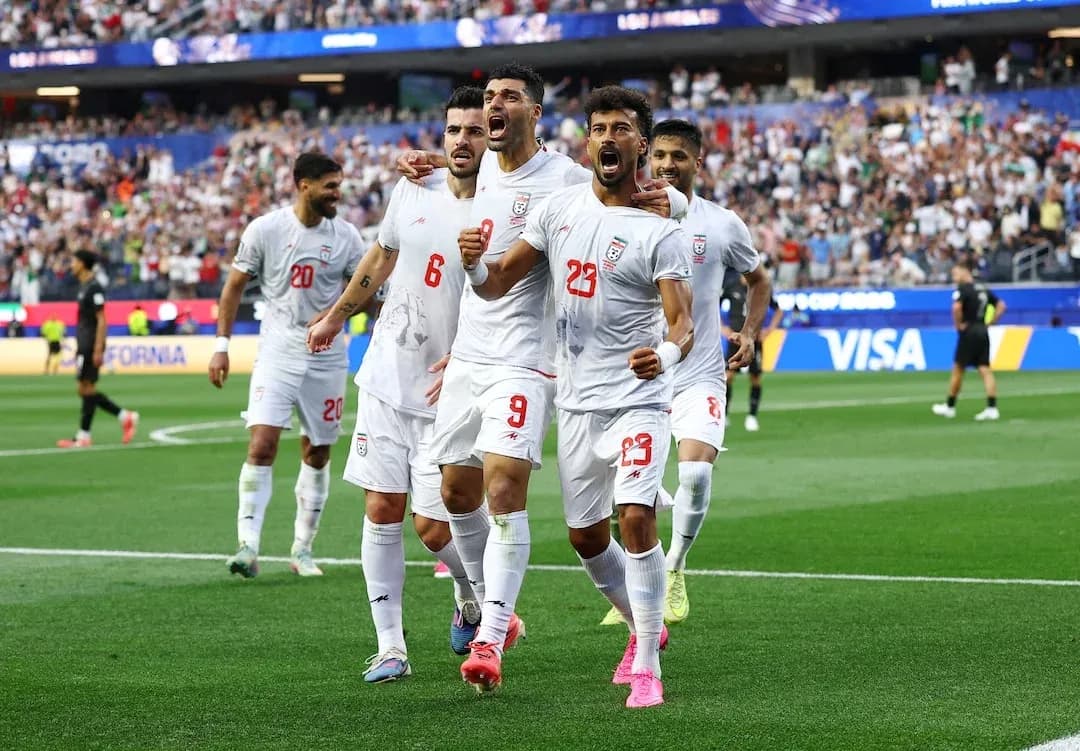
Iran 2-2 New Zealand at SoFi Stadium opened Group G with a high-tempo draw that reflected both sides’ attacking intent and defensive vulnerabilities. With both teams already in Round of 32 qualification slots pre-tournament, the shared points move Iran to 2 points and keep them second, while New Zealand rise to 2 points and stay top of the group on rank, with goal difference unchanged for both after another 2-2 scoreline.
Match Report
The game exploded into life early. In the 7th minute, New Zealand struck first: New Zealand goal — E. Just (assisted by C. Wood). A direct move into the right channel allowed Chris Wood to roll a pass across the box, with Elijah Just timing his run to finish low past Alireza Beiranvand for 0-1.
Iran responded by pushing their full-backs higher, and their equaliser came from that flank. In the 32nd minute, Iran goal — R. Rezaeian (unassisted). The right-back stepped inside onto a loose ball at the edge of the area and drove a powerful shot into the far corner to level at 1-1, a reward for Iran’s growing territorial pressure.
Iran adjusted at the break to add more vertical threat. In the 46th minute, M. Ghaedi replaced A. Yousefi (Iran), introducing fresh attacking legs on the flank. Seven minutes later, they changed the focal point up front: in the 53rd minute, A. Alipour replaced S. Moghanlou (Iran), looking for more mobility between New Zealand’s centre-backs.
Almost immediately after that second Iran change, New Zealand reasserted themselves. In the 54th minute, New Zealand goal — E. Just (assisted by C. Wood). Again the combination between Wood and Just undid Iran; Wood dropped off the front line to receive and slipped Just in behind, the winger finishing calmly to restore New Zealand’s lead at 1-2.
Iran refused to fold and continued to funnel play through the right. Their pressure told just past the hour. In the 64th minute, Iran goal — M. Mohebi (assisted by R. Rezaeian). A deep cross from Rezaeian found Mohammad Mohebi arriving from midfield, and his guided header back across Max Crocombe made it 2-2.
Immediately after the equaliser, Iran refreshed their left side and leadership. In the 65th minute, E. Hajsafi replaced S. Ghoddos (Iran), adding experience and a more conservative balance in midfield as Iran looked to manage transitions.
New Zealand then turned to their bench in a double change aimed at injecting pace and control. In the 68th minute, B. Old replaced L. Cacace (New Zealand), shifting the dynamic on the left, and R. Thomas replaced C. McCowatt (New Zealand), adding a fresh passer between the lines. As the game entered its final phase, they continued to rotate the back line: in the 78th minute, C. Elliot replaced T. Payne (New Zealand), offering fresh energy at right-back to cope with Iran’s wide overloads.
Iran’s final attacking roll of the dice saw them remove their main striker. In the 80th minute, A. Hosseinzadeh replaced M. Taremi (Iran), a move that reconfigured the front line with more fluid interchanging rather than a fixed target man.
Discipline had largely been controlled, but Iran picked up the game’s only booking late on. In the 89th minute, E. Hajsafi (Iran) — yellow card (Tripping), after halting a New Zealand counter in midfield.
New Zealand used stoppage time to shore up the centre and press from the front. In the 90+2' minute, J. Randall replaced S. Singh (New Zealand), adding fresh legs in the attacking midfield band, and T. Bindon replaced M. Stamenic (New Zealand), a defensive-minded switch to protect the draw. Neither side could find a decisive chance thereafter, and the match closed at 2-2.
Fixture Statistics & Tactical Audit
- xG: Iran 1.5 vs 1.24 New Zealand
- Possession: Iran 48% vs 52% New Zealand
- Shots on Target: Iran 4 vs 8 New Zealand
- Goalkeeper Saves: Iran 6 vs 2 New Zealand
- Blocked Shots: Iran 5 vs 2 New Zealand
The underlying numbers suggest a broadly fair draw, with a slight Iranian edge in chance quality but a larger New Zealand volume of efforts on target. Iran’s 1.5 xG from 4 shots on goal and 17 total attempts indicates they were relatively efficient when they did work shooting positions, particularly through late-arriving midfield runs and full-back deliveries. New Zealand’s 1.24 xG from 8 shots on target and 14 total shots reflects a more direct, vertical approach built around Chris Wood’s hold-up play and Just’s diagonal runs, generating a higher number of efforts but often from less optimal locations.
Defensively, Iran’s 6 saves versus New Zealand’s 8 shots on goal underlines how often Beiranvand was exposed by space in front of his back four, especially when full-backs advanced simultaneously. Conversely, New Zealand allowed 17 shots but blocked 5, showing a compact penalty-box structure that forced Iran to shoot through traffic. The 52% possession for New Zealand aligned with their slightly superior pass completion (85% to Iran’s 77%), but the xG balance and shot map pattern point to a contest where both teams traded periods of control without either fully suppressing the other’s main attacking routes.
Standings Update & Seasonal Impact
With the 2-2 draw, Iran add 1 point to move from 1 to 2 points in Group G. Their goals for tally rises from 2 to 4, and goals against from 2 to 4, leaving their goal difference unchanged at 0. They remain in 2nd place within a Round of 32 qualification zone, but the lack of a win keeps them narrowly behind New Zealand on group ranking.
New Zealand also move from 1 to 2 points, maintaining top spot in Group G on rank. Their goals for increase from 2 to 4, and goals against from 2 to 4, preserving a goal difference of 0. With identical records but positional advantage, New Zealand stay marginally ahead in the battle for group supremacy, while both sides strengthen their grip on Round of 32 qualification positions ahead of the remaining group fixtures.
Lineups & Personnel
Iran Starting XI
- GK: Alireza Beiranvand
- DF: Ramin Rezaeian, Shoja Khalilzadeh, Ali Nemati, Milad Mohammadi
- MF: Mohammad Mohebi, Saman Ghoddos, Saeid Ezatolahi, Aria Yousefi
- FW: Shahriar Moghanlou, Mehdi Taremi
New Zealand Starting XI
- GK: Max Crocombe
- DF: Tim Payne, Finn Surman, Michael Boxall, Liberato Cacace
- MF: Joe Bell, Marko Stamenic, Callum McCowatt, Sarpreet Singh, Elijah Just
- FW: Chris Wood
Post-Match Verdict
This was an open, tactically balanced contest in which both sides’ primary strengths were clearly on show. Iran were notably effective in wide areas and with late midfield runs, reflected in their 10 shots inside the box and 1.5 xG, with full-back Ramin Rezaeian directly involved in both goals. Their attacking play was productive (17 total shots) but they lacked full control of transitions, allowing New Zealand 8 shots on target and forcing Beiranvand into 6 saves.
New Zealand’s game plan around Chris Wood’s physical presence and Elijah Just’s movement was highly productive, as shown by Just’s brace and Wood’s two assists, underpinning their 1.24 xG and superior shooting accuracy (8 shots on goal from 14 attempts). However, their inability to fully close down Iran’s crossing lanes and track midfield runners led to 4 shots on target conceded and 2 goals against, despite a strong passing platform (85% completion and 52% possession). Overall, the draw was a statistically grounded outcome: Iran showed enough attacking variety to merit a point, while New Zealand’s more direct, high-output approach justified their share of the spoils but fell just short of turning control into a first group win.