Klopp’s Controversial Word Sparks Debate in Germany
Germany had just thrashed Curacao 7-1. The football was flawless, the statement emphatic. Yet the loudest noise around the national team came from a television studio, not the pitch.
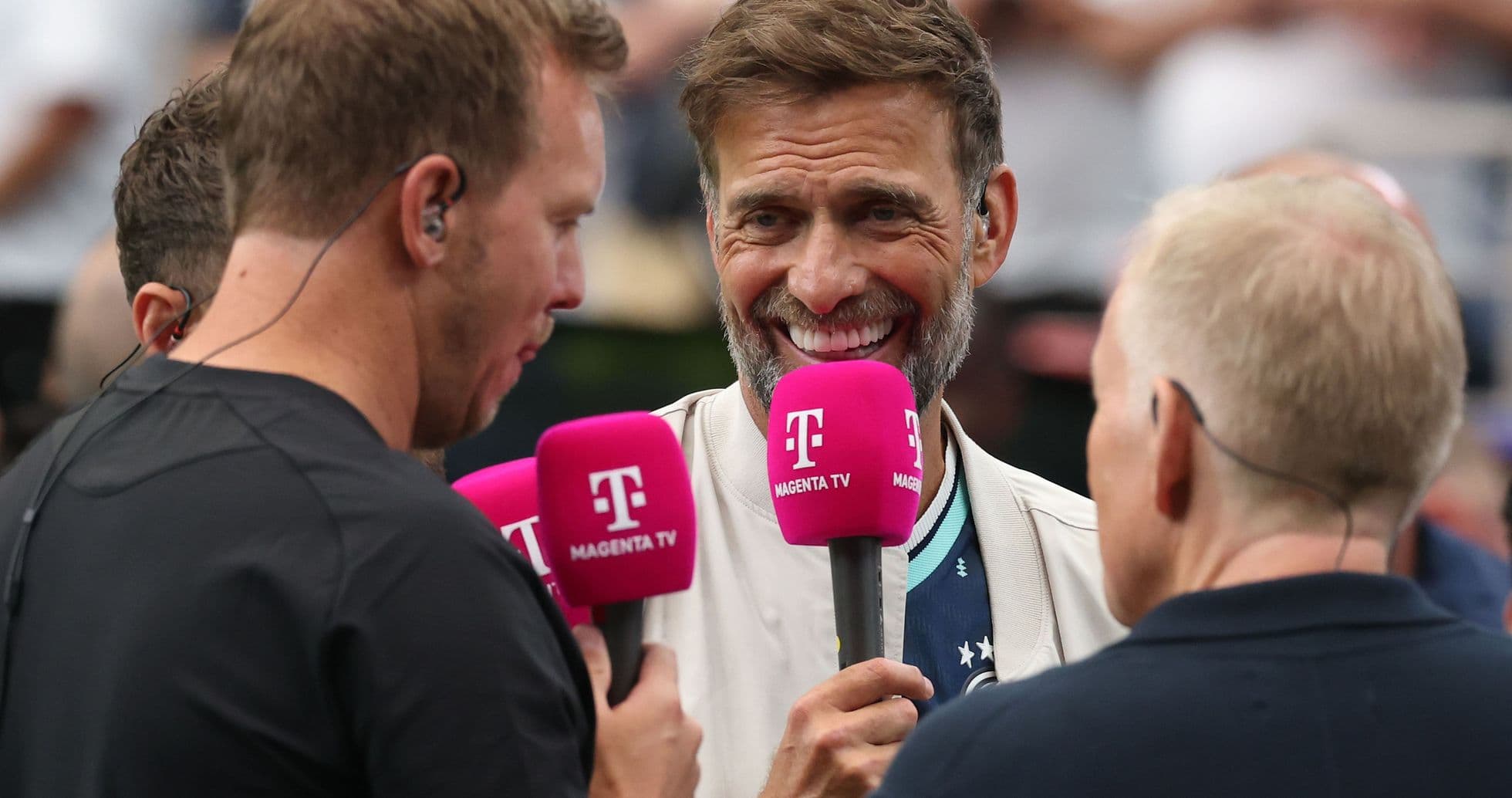
Jürgen Klopp, sitting in a MagentaTV chair rather than a dugout, needed only one word to ignite a national debate: “still”.
During the build-up to Germany’s World Cup opener, Klopp was on punditry duty alongside Thomas Müller, dissecting Julian Nagelsmann’s line-up. With the easy confidence of a man long linked with the national job, he dropped the line that would frame the evening.
“Luckily, Julian Nagelsmann is still picking the team.”
That “still” landed like a dart. Viewers heard it. Pundits seized on it. In a country where Klopp’s name hovers permanently over the Bundestrainer’s seat, it sounded less like banter and more like a reminder that Nagelsmann’s position remains under scrutiny.
The implication was obvious: for how long?
From throwaway line to national talking point
Klopp realised the damage almost immediately. The reaction was swift, and it was fierce. Lothar Matthäus, never shy of a verdict, criticised the remark, reading it as a slight on Nagelsmann and his staff on the eve of a World Cup campaign.
For a coach who has built a reputation on emotional intelligence and dressing-room empathy, it was a rare misstep. And he knew it.
Once the final whistle confirmed Germany’s 7-1 demolition of the Caribbean side, Klopp used the post-match slot to do what many in his position might have ducked: he addressed Nagelsmann directly, live on air.
“I’ve already found the most hated word of the year: ‘still’,” he admitted, visibly irritated with himself. “I could have punched myself in the face for that, but it was already too late and I was on TV. It just slipped out so casually and has absolutely no relevance.”
No excuses, no deflection. Just Klopp, turning the joke on himself.
“I’ll be 59… and I’m still an idiot”
The apology did not stop at semantics. With his 59th birthday around the corner, Klopp leaned into self-deprecation to defuse the tension in a live exchange with Nagelsmann.
“There’s one more thing I have to say… we still need to make time for this,” he said, speaking as much to the viewers as to the coach. “We’re also informally part of the team, we’re absolutely on your side. What I’ve realized is: I’ll be 59 the day after tomorrow and I’m still an idiot. We are completely on your side, whatever you do. Nothing was intended to come of it to disrupt the process here.”
It was classic Klopp: contrite, humorous, but pointedly clear. He wanted no lingering suspicion that he was circling the job or undermining the man currently in it.
He blamed a lapse in judgement, nothing more. Yet in a tournament environment where every word carries weight, the damage control was necessary. Germany’s head coach does not need his most famous potential successor inadvertently casting a shadow over the campaign.
Banter, Musiala and a line crossed
Complicating the picture was the presence of Thomas Müller on the original broadcast. The Bayern Munich veteran, never short of mischief, joined Klopp in playfully nudging Nagelsmann before kick-off.
They jokingly urged the coach to drop Jamal Musiala, Bayern’s prodigious talent and one of the faces of this new Germany. Müller also ribbed Klopp, teasing that he had forgotten it was only June, not September – the month some analysts have floated as a possible moment for Klopp to take over the national team.
Inside the studio, it felt like light-hearted football humour between old colleagues. Outside it, the mood was very different.
The combination of Klopp’s “still” and the Musiala jokes was viewed by several high-profile figures as a step too far. Matthäus led the criticism, branding the interaction unprofessional and arguing that it placed needless pressure on Nagelsmann at a time when the focus should be solely on results.
In a country obsessed with its national team, this was more than harmless TV chatter. It was seen as a reminder of the political currents that always swirl around the Germany job.
Germany brush off the noise – for now
On the pitch, Nagelsmann’s players did the best thing they could: they made the conversation about football. A 7-1 win, whatever the opposition, sends a message. Germany looked sharp, ruthless, and utterly untroubled by the storm brewing in the studio.
Klopp, for his part, seemed determined not to become a storyline that follows them around North America. He stressed that he and the MagentaTV crew saw themselves as “informally part of the team” and fully behind Nagelsmann’s work.
The challenge now is to keep it that way.
Germany’s group will harden quickly. Ecuador await, and then Ivory Coast, African heavyweights with the physicality and belief to test any European side. The comfort of a soft opener is gone; the real measuring stick lies ahead.
Next stop is Toronto on Saturday, where Germany meet Ivory Coast. The cameras will again find Nagelsmann. Somewhere, inevitably, they will find Klopp too.
The question is whether, from here on, the only word that matters is “win.”