Manchester City Maintain Premier League Lead with 1–0 Win over Coventry
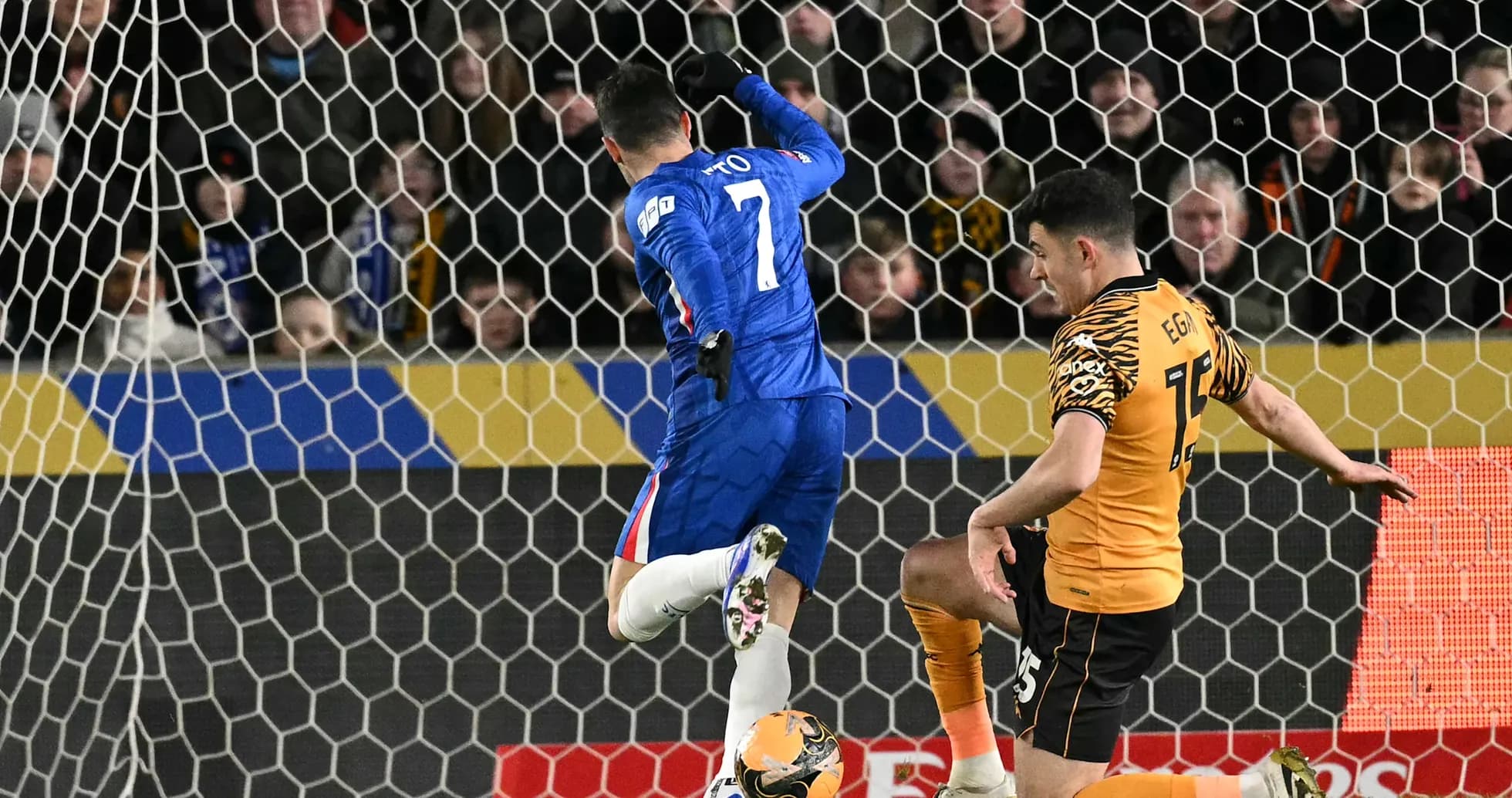
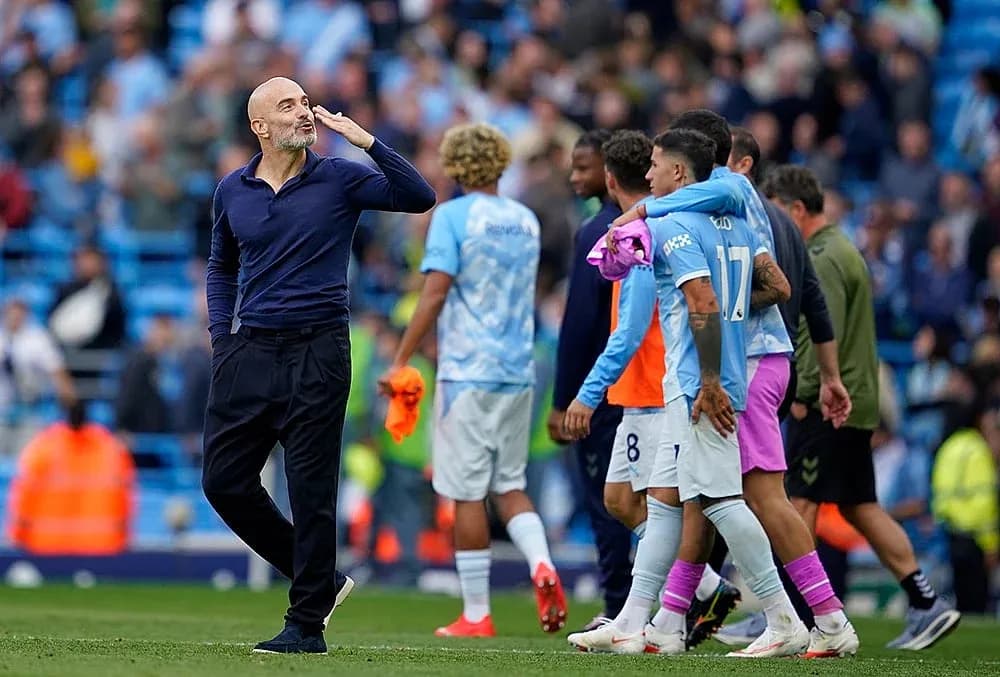
Etihad Stadium felt less like a battleground and more like a laboratory for control as Manchester City edged Coventry 1–0, tightening their early grip on the Premier League summit. Following this result, City sit 1st with 9 points from 3 matches, their overall goal difference +5 (7 scored, 2 conceded) reflecting a side that dominates more than it dazzles. Coventry remain rooted to 20th with 0 points, their overall goal difference -5 (0 scored, 5 conceded) underlining the gulf in cutting edge that defined the afternoon.
I. The Big Picture – Systems, Not Just Scorelines
Enzo Maresca stayed loyal to his blueprint: a 4-2-3-1 that morphs in possession. With G. Donnarumma behind a back four of A. Khusanov, Rúben Dias, M. Guéhi and J. Gvardiol, City’s structure was built on secure first passes and aggressive rest-defence. The double pivot of E. Fernández and E. Anderson provided the metronome and the screen, allowing a fluid band of three – A. Semenyo, R. Cherki, I. Ndiaye – to orbit around E. Haaland.
Across from them, F. Lampard’s Coventry arrived at the Etihad in a 3-4-2-1, pragmatic and compact. C. Rushworth anchored a back three of A. Amenda, B. Thomas and E. Pinnock, with M. van Ewijk and J. Dasilva as wide outlets. The central pair of F. Onyeka and M. Grimes were tasked with both smothering City’s interior play and springing J. Rudoni and E. Mason-Clark in support of lone forward T. Awoniyi.
Heading into this game, the numbers already told a story of asymmetry. Overall, City had scored 7 and conceded 2 from 3 matches, an overall attacking average of 2.3 goals per game and overall defensive average of 0.7 conceded. At home, they were more measured but still efficient: 3 scored and 1 conceded in 2 fixtures, averaging 1.5 goals for and 0.5 against at the Etihad. Coventry, by contrast, arrived goalless in the league – 0 scored and 5 conceded overall, with an overall defensive average of 1.7 conceded per match and an overall attacking average stuck at 0.0. On their travels, they had shipped 4 and scored none in 2 away games, conceding on average 2.0 away.
The result followed the script: City monopolised territory and tempo; Coventry survived long stretches but never truly threatened to break their drought.
II. Tactical Voids – Absences and Discipline
City’s notable absentee was J. Doku, missing with a calf injury. Without his pure wide chaos, Maresca leaned even more into central overloads, trusting Semenyo and Ndiaye to stretch Coventry diagonally rather than hugging the touchline. It nudged City towards a more positional, less transition-heavy performance.
Coventry were hit harder by absences: Y. Gboho (transfer negotiations), K. Kesler-Hayden and H. Wright (both muscle injuries), L. Woolfenden (knee injury) and S. Mfuni (loan agreement) all unavailable. The knock-on effect was clear in Lampard’s front line and depth – Awoniyi carried the striking burden, with L. Tchaouna, E. Simms and B. Thomas-Asante left as bench options rather than part of a rotating, press-intensive front three.
Discipline-wise, the season trends framed the risk. City’s yellow cards this campaign have been evenly spread, with 25.00% of their cautions coming in each of the 31–45, 46–60, 76–90 and 91–105 minute windows – a pattern of controlled aggression rather than chaos. Coventry’s bookings have clustered more erratically: 50.00% of their yellows arriving between 16–30 minutes, then 25.00% from 76–90 and another 25.00% in 91–105, suggesting early frustration and late fatigue. That tendency to fray under pressure was always likely to be tested by City’s relentless circulation.
Neither side has taken a penalty in the league so far; both have 0 penalties scored and 0 missed, so the spot-kick narrative remains unwritten.
III. Key Matchups – Hunter vs Shield, Engine Room vs Enforcer
The headline duel was always going to be E. Haaland against Coventry’s defensive shield. Haaland entered this round as one of the league’s leading forwards: 3 goals from 3 appearances, 13 shots with 8 on target, and an overall rating of 7.8. His presence alone bends defensive lines. Coventry’s overall defensive record – 5 conceded from 3, with 4 conceded away – suggested a back line still learning its distances.
Pinnock, Thomas and Amenda formed a narrow triangle around him, often leaving the responsibility of screening passes to Onyeka and Grimes. That was the crux: if Coventry’s midfield couldn’t cut the supply, their back three would be dragged into constant emergency defending. Haaland’s movement between the right-sided centre-back and wing-back channel, especially against Amenda and van Ewijk, forced Coventry to collapse centrally, opening pockets for Cherki and Ndiaye.
Behind the striker, Cherki was the creative fulcrum. With 2 goals, 2 assists, 10 key passes and 92% passing accuracy heading into the game, he has quickly become City’s central artist. His ability to receive between the lines and turn onto either foot posed a direct challenge to Onyeka, whose remit was to disrupt, foul when needed, and deny City’s number 10 the time to slip Haaland through.
On the flanks, Semenyo – already with 2 assists, 6 key passes and 91% passing accuracy this season – offered a different kind of threat, repeatedly attacking the half-spaces rather than chalk-on-boots width. His duels (36 contested, 12 won) and dribble volume (15 attempts) speak to a player who relentlessly tests full-backs and wing-backs, pinning them deeper than they’d like.
Defensively, City’s “shield” was personified by Gvardiol. His season numbers – 7 tackles, 1 blocked shot, 5 interceptions and 19 duels won from 34 – underline how often he steps out to kill counters at source. Against Awoniyi, whose game thrives on physical duels and runs into the channels, Gvardiol’s timing and Dias’ covering angles were crucial in ensuring Coventry’s transitions fizzled before they reached Donnarumma.
IV. Statistical Prognosis – Control as a Defensive Weapon
City’s overall attacking average of 2.3 goals per match and their record of failing to score in 0 games this season underline a side that almost always finds a way through. Coventry, conversely, have failed to score in all 3 of their fixtures so far, both at home and away, and have yet to keep a clean sheet. The statistical collision was stark: a team that always scores against a team that never does.
Even without explicit xG values, the shape of the numbers points to a predictable pattern. City’s clean sheet count – 1 overall, at home – combined with their low overall concession rate of 0.7 per game suggests that their best defending is done with the ball. Coventry’s away concession average of 2.0 and their inability to generate any goals for on their travels frame their 3-4-2-1 not as an attacking springboard but as a survival mechanism.
In the end, the 1–0 scoreline felt like a compressed version of the broader data story. City, top of the table, moved the ball with the assurance of a side whose structure is already bedded in. Coventry, bottom and still searching for their first league goal, defended with courage but lacked the vertical punch to turn resistance into revolt.
For Maresca, the narrative is of a machine quietly calibrating itself – Haaland’s ruthless presence, Cherki’s artistry, Gvardiol’s authority and Semenyo’s industry all fitting into a coherent whole. For Lampard, the task is more existential: to find goals in a squad short of key attacking profiles, to harness the energy of players like L. Tchaouna, E. Simms and B. Thomas-Asante, and to turn a respectable defensive shape into something that can actually hurt teams like Manchester City, not just survive them.