Napoli Dominates Pisa in Serie A Clash
The Arena Garibaldi – Stadio Romeo Anconetani had the feel of a last stand as Pisa, already entrenched at the bottom of Serie A, hosted a Napoli side chasing the final polish on a Champions League season. In the end, the script followed the form book: a 3-0 away win, with Napoli’s structural superiority and individual quality overwhelming a Pisa team whose numbers have been warning of collapse all year.
Heading into this game, the league table framed the contest starkly. Pisa were 20th with 18 points from 37 matches, a goal difference of -44 (25 scored, 69 conceded overall), and a form line of “LLLLL” that spoke of a side simply unable to arrest its slide. At home they had played 19 times, winning 2, drawing 4 and losing 13, with just 9 goals for and 26 against. Napoli arrived in Tuscany as the antithesis: 2nd in Serie A on 73 points, with a goal difference of 21 (57 for, 36 against overall), and an away record of 10 wins, 3 draws and 6 defeats, scoring 25 and conceding 18 on their travels.
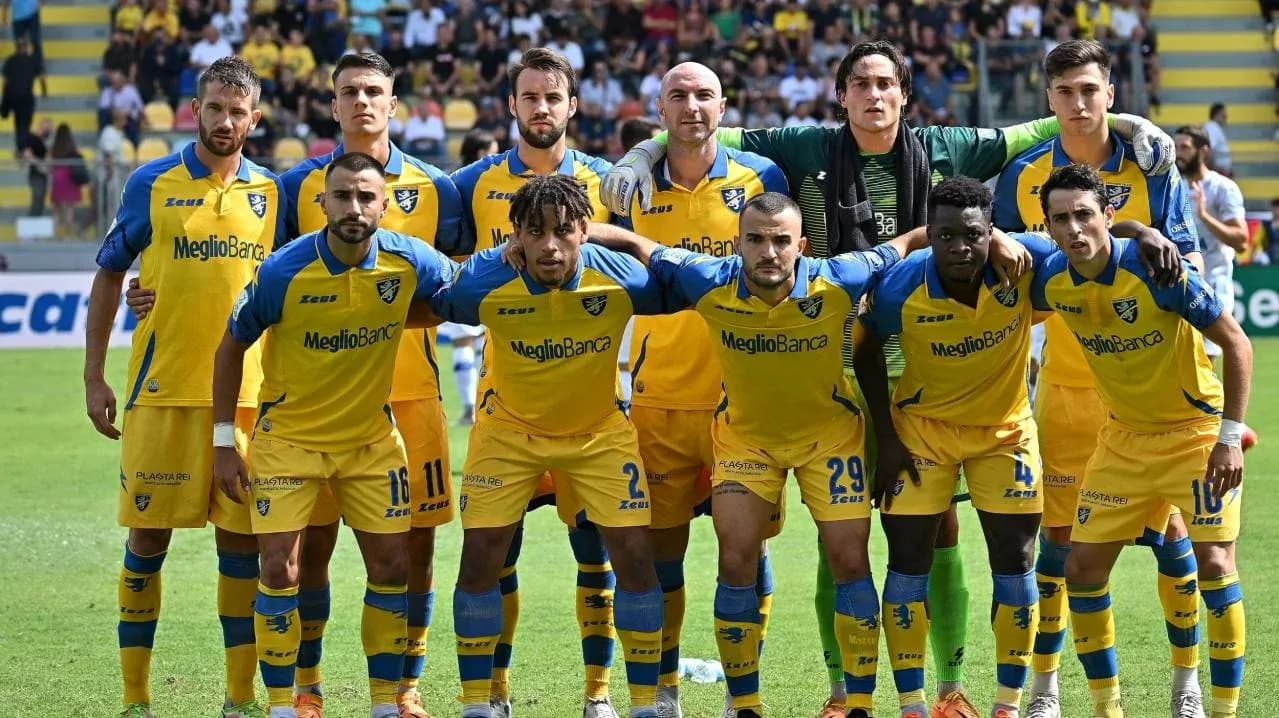
Oscar Hiljemark leaned into Pisa’s season-long identity by reverting again to the 3-5-2 that has been his most-used shape (20 league matches in this formation). A. Semper anchored a back three of A. Calabresi, A. Caracciolo and S. Canestrelli, with the width entrusted to M. Leris and S. Angori as nominal wing-backs. Inside, the trio of M. Aebischer, M. Hojholt and E. Akinsanmiro were asked to knit play and screen transitions, while S. Moreo and F. Stojilkovic led the line.
The selection, however, carried the shadow of absences. Pisa’s list of non-participants was long and telling: R. Bozhinov and F. Loyola were both suspended by red cards, while F. Coppola, D. Denoon and M. Tramoni were out with muscle and ankle injuries, and Lorran was listed as inactive. For a squad already stretched by a campaign of struggle, those losses stripped away rotation options and, crucially, potential pace and unpredictability in the final third.
Antonio Conte, by contrast, arrived with a plan honed by a season of flexibility. Napoli’s season statistics show a preference for a 3-4-2-1, used 21 times, but here he rolled out a 3-4-3 that still echoed his core principles. A. Meret stood behind a back three of S. Beukema, A. Rrahmani and A. Buongiorno, a physically imposing unit built for dominance in duels and aerial control. The midfield four of G. Di Lorenzo, S. Lobotka, S. McTominay and L. Spinazzola provided the platform: Lobotka as the metronome, McTominay as the vertical runner and enforcer, Di Lorenzo and Spinazzola stretching Pisa’s narrow block.
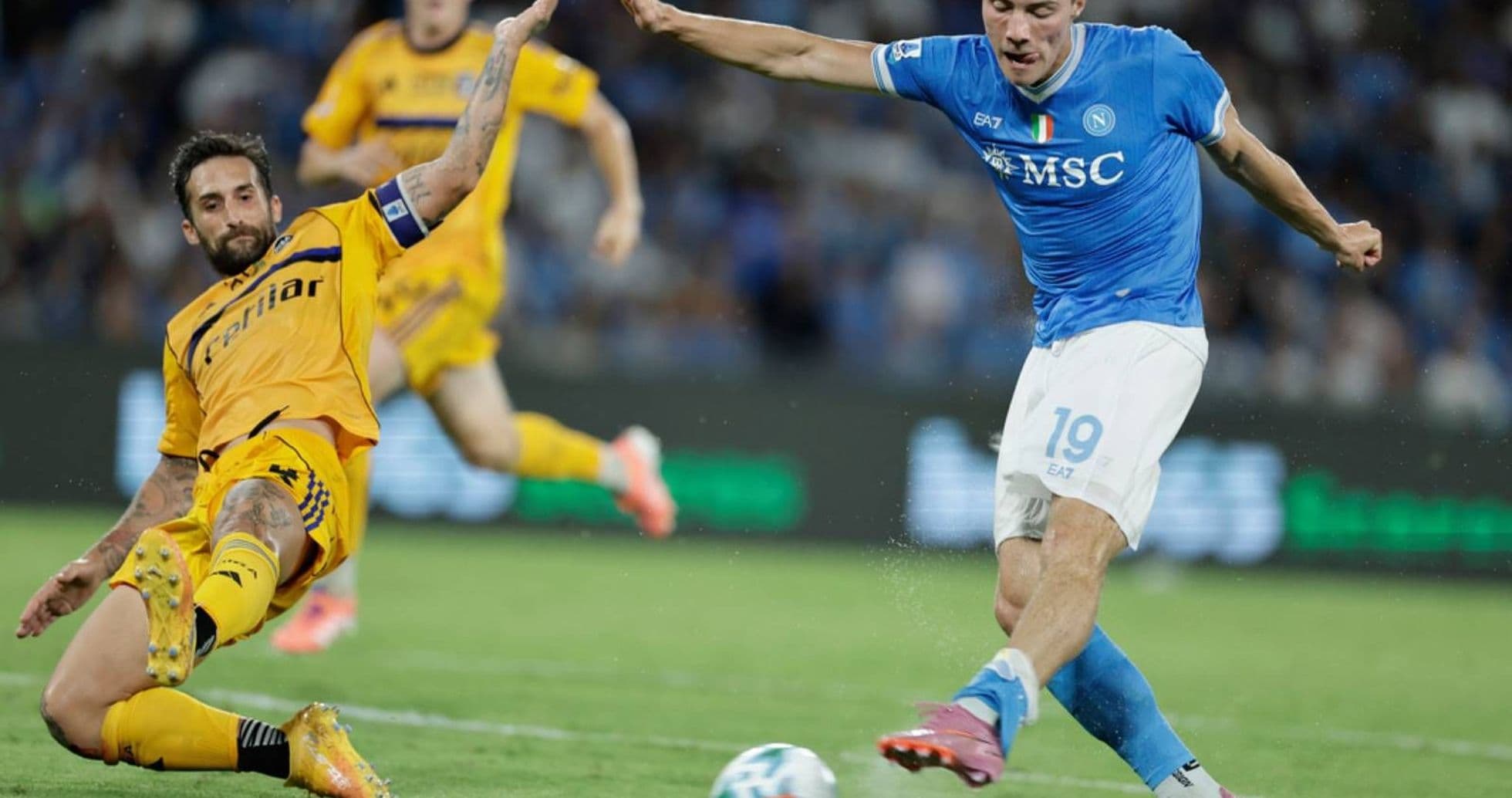
Ahead of them, the front three carried the cutting edge. E. Elmas and Alisson Santos flanked R. Hojlund, who arrived as Napoli’s leading scorer with 11 league goals and 5 assists from 32 appearances, supported by 44 shots (23 on target) and 31 key passes. Hojlund’s profile – high-volume duels (303 overall, 108 won), direct running and a willingness to attack space – made him the natural “Hunter” in this contest.
The “Hunter vs Shield” duel therefore focused on Hojlund against Pisa’s beleaguered defensive unit, symbolised by A. Caracciolo. Caracciolo’s season has been one of constant fire-fighting: 35 appearances, 71 tackles, 24 successful blocks and 51 interceptions, but also 10 yellow cards and 40 fouls committed. That profile tells of a defender constantly on the edge, forced into last-ditch interventions by a system that leaves him exposed. With Pisa conceding on average 1.4 goals at home and 1.9 overall, and with a particular vulnerability late in games – 27.54% of their goals against coming between 76-90 minutes – the matchup always looked precarious.
Napoli’s attacking timings only sharpened that edge. Heading into this game, they averaged 1.3 goals away from home and 1.5 overall, with a remarkably even spread across the 90 minutes. They were especially dangerous early and just after the interval: 19.64% of their goals arrived between 0-15 minutes, another 19.64% between 46-60 minutes, and 17.86% in the 76-90 window. That meant Pisa’s late-game frailty overlapped almost perfectly with Napoli’s capacity to finish strongly, a critical intersection that played out as the visitors managed the tempo and killed the contest without ever needing to overextend.
Engine Room
In the “Engine Room”, the duel between M. Aebischer and S. McTominay set the tone. Aebischer has been one of Pisa’s more reliable performers, with 34 appearances, 1 goal, 1 assist and 1,490 passes at an 85% accuracy, plus 64 tackles and 35 interceptions. He is the side’s organiser and most consistent ball-progressor. McTominay, however, brought a different profile entirely: 10 goals, 3 assists, 71 shots (34 on target), 1,262 passes at 88% accuracy, 28 tackles, 13 blocked shots and 21 interceptions. He is both playmaker and finisher, and his ability to arrive late in the box made him a constant problem for Pisa’s back line, especially as their midfield tired.
Discipline and card profiles also shaped the narrative. Pisa as a team have shown a tendency toward late yellow cards, with 25.97% of their cautions coming between 76-90 minutes, and they have drawn multiple red cards across the campaign. Individually, the presence of high-card players like Caracciolo (10 yellows) and M. Aebischer (8 yellows) hinted at the risk of tactical fouling to stem Napoli counters. Napoli, for their part, have a more controlled disciplinary record but are not immune to flashpoints: Juan Jesus, among their top carded players, has 9 yellows and 1 yellow-red, and the team’s red cards this season have all arrived between 76-90 minutes. Conte’s side, however, managed this fixture with maturity, avoiding the kind of late-game chaos Pisa often fall into.
From a statistical prognosis standpoint, this match always leaned heavily towards the visitors. Pisa’s attack has been anaemic all season, averaging just 0.5 goals at home and 0.7 overall, failing to score in 21 of 37 league matches. Napoli, by contrast, combined a solid defensive base – 0.9 goals conceded away, 1.0 overall – with a multi-layered attack and 14 clean sheets in total, 8 of them on their travels. Even without David Neres and R. Lukaku through injury, and M. Politano suspended by yellow cards, Napoli’s squad depth allowed Conte to field a front line with enough pace, movement and finishing to repeatedly stress Pisa’s last line.
Following this result, the numbers and the narrative aligned. Napoli’s xG profile this season, built on steady chance creation rather than wild volatility, translated into a controlled, clinical performance. Pisa, undermined by absences and season-long structural weaknesses, could not generate the volume or quality of chances needed to trouble a defence that has conceded over 1.5 goals only rarely (2 matches over the 2.5 goals-against threshold all season). The 3-0 scoreline reflected more than just a bad day; it was the logical outcome of a season’s worth of trends colliding in one afternoon in Pisa.