Parma vs AS Roma: A Five-Goal Serie A Drama
On a warm May afternoon at Stadio Ennio Tardini, a mid-table survivor and a European chaser produced a five-goal drama that felt like a condensed version of their entire Serie A seasons. Parma, 13th in the table with 42 points and a goal difference of -18 heading into this game, pushed AS Roma to the brink but ultimately fell 3-2 in a contest that showcased both sides’ tactical identities and structural flaws.
Roma arrived as a hardened top-six outfit, 5th with 67 points and a goal difference of 24, built on a powerful attack that has delivered 55 goals overall at 1.5 per game, and a defence that usually bends more away from home than in the capital. Parma, by contrast, have survived on grit and late surges rather than firepower: only 27 goals overall at 0.8 per game, but with a striking 34.62% of those coming in the 76-90 minute window. That late punch would matter again.
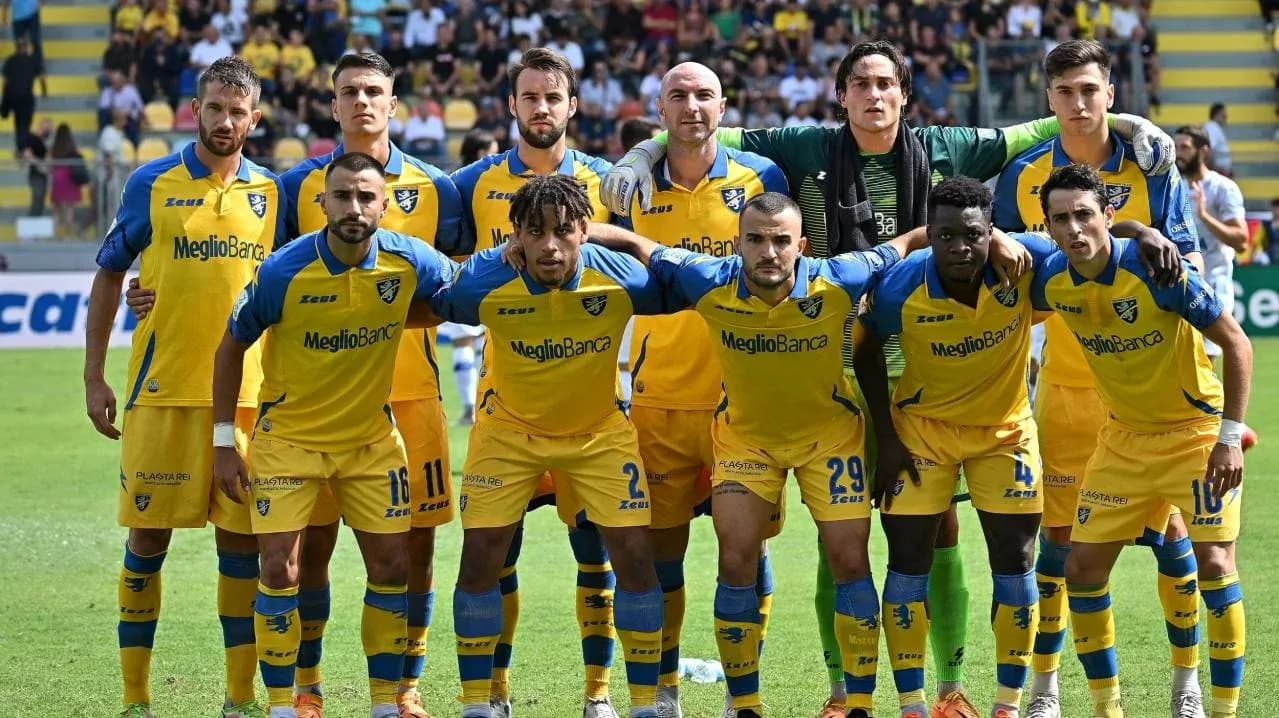
Carlos Cuesta doubled down on Parma’s season-long tactical spine, rolling out the familiar 3-5-2. Z. Suzuki anchored a back three of A. Circati, M. Troilo and L. Valenti, with width and running from wing-backs E. Delprato and E. Valeri. In the middle, C. Ordonez, H. Nicolussi Caviglia and M. Keita formed a busy, combative trio, asked to compress space and spring transitions for a front pair of N. Elphege and G. Strefezza.
Across from them, Piero Gasperini Gian stayed true to Roma’s dominant template: a 3-4-2-1 that has underpinned 21 wins from 36 league matches. M. Svilar stood behind a back line of G. Mancini, E. Ndicka and M. Hermoso, with Z. Celik and Wesley Franca as the wide engines. In central midfield, B. Cristante and M. Kone were tasked with controlling rhythm and screening counters, while the creative weight fell on the double “10s” M. Soule and P. Dybala behind lone striker D. Malen.
The opening exchanges followed the season’s statistical script. Roma, whose goals-for distribution spikes between 16-45 minutes (32.72% of their league goals in that window), asserted early control. Parma, a side that concedes 15.22% of their goals in the first 15 minutes and 13.04% from 31-45, tried to ride out the storm with a compact 5-3-2 block, wing-backs pinned deep by Celik and Wesley Franca.
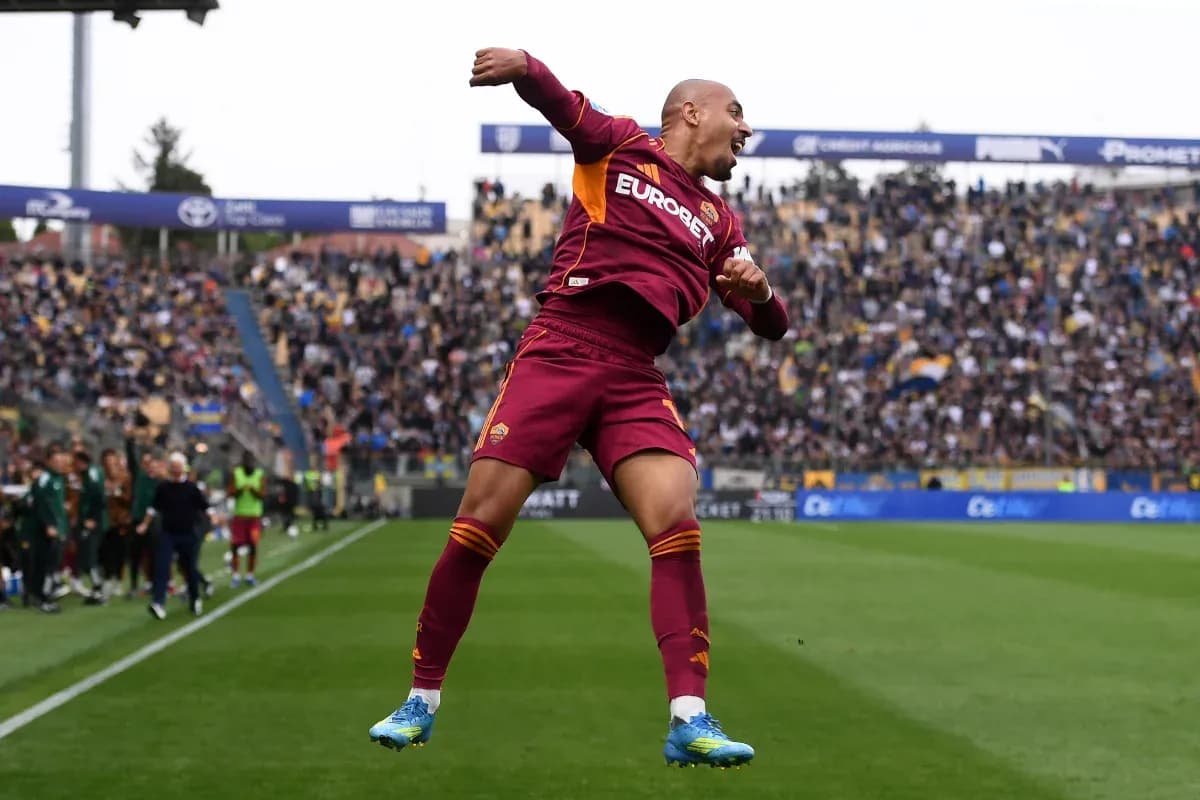
The first turning point came before the break, in keeping with Roma’s habit of striking early and Parma’s vulnerability in the first half. Roma’s structure – back three spreading wide, Cristante dropping to form a situational back four, Soule drifting inside to overload the half-space – repeatedly dragged Parma’s midfield line out of shape. Soule, Serie A’s 11th-ranked assist provider this season with 5 assists and 43 key passes, found pockets between the lines, knitting combinations with Dybala and Malen. The opener, arriving before half-time, was the logical outcome of those patterns: Roma exploiting the channels between Parma’s wide centre-backs and wing-backs, Malen’s movement and Soule’s timing carving out the decisive lane.
Heading into this game, Parma’s home record told a story of effort without edge: 4 wins, 6 draws and 8 defeats at Ennio Tardini, with only 15 goals scored at home (0.8 per match) and 25 conceded (1.4 per match). That fragility resurfaced after the interval. Roma, who average 1.3 goals on their travels and concede 1.2, are most dangerous between 61-75 minutes, where 23.64% of their league goals arrive. As the second half unfolded, their wing-backs pushed higher, Cristante stepped forward, and Roma’s 3-4-2-1 morphed into a 3-2-4-1, pinning Parma deep.
Yet Parma’s resilience is woven into their defensive numbers. Despite conceding 45 goals overall at 1.3 per game, they have collected 12 clean sheets, and their three centre-backs are built for the trenches. Troilo, Serie A’s leading red-carded player this season, is a high-risk, high-impact defender: 23 tackles, 15 successful blocks and 15 interceptions underline his front-foot aggression. Against Roma’s rotating front three, he and Circati repeatedly stepped out to contest Malen between the lines, while Valenti tried to track Dybala’s drifting runs.
The “Hunter vs Shield” duel was embodied by Malen against that back three. Malen arrived as one of the league’s most efficient finishers: 13 goals from 45 shots, 28 on target, and 3 penalties scored from 3. His duel stats – 128 contests, 43 won – show a forward who thrives in physical games. Parma’s defence, which concedes 28.26% of its goals between 76-90 minutes, was always going to be stretched late on by his relentless movement and Roma’s depth.
Parma’s own “Hunter” started on the bench: Mateo Pellegrino, the club’s top scorer with 8 league goals, a towering presence who has taken 50 shots and blocked 5 at the other end. When he entered the fray, [IN] replaced [OUT] became more than a notation; it changed Parma’s attacking grammar. Long diagonals from Troilo and Valenti suddenly had a clear target, and Pellegrino’s 504 duels this season, 215 won, translated into knockdowns and fouls drawn high up the pitch.
In midfield, the “Engine Room” battle pitted Soule’s artistry and Cristante’s control against Parma’s more workmanlike trio. Soule’s 948 passes at 84% accuracy and 91 dribble attempts (33 successful) illustrate why he is Roma’s creative metronome; his ability to receive under pressure and turn through the first line repeatedly broke Parma’s press. On the other side, Nicolussi Caviglia and Keita were more about disruption than progression, tasked with limiting Roma’s central combinations and protecting a back line already stretched by width.
Discipline and card trends added a simmering edge. Heading into this game, Parma’s yellow-card distribution showed spikes in the 46-60 and 76-90 minute windows (both 21.88%), while Roma’s bookings cluster from 46-90 (69.24% across those three 15-minute bands). It was no surprise that as the match opened up in the final half-hour, tackles grew later, duels more desperate, and the rhythm more fractured. Mancini, one of Serie A’s most carded defenders with 9 yellows this season and 69 fouls committed, patrolled the right side of Roma’s back three with his usual edge, stepping into midfield to suffocate Strefezza between the lines.
The absences shaped the tactical voids on both sides. Parma were without A. Bernabe, B. Cremaschi, M. Frigan and G. Oristanio – four players who could have added technical security and rotation options in the final third. Bernabe’s absence in particular forced Cuesta to lean on a more industrious midfield rather than a true creative pivot. Roma, missing A. Dovbyk, E. Ferguson, L. Pellegrini and B. Zaragoza, had to compress their attacking hierarchy: more responsibility on Dybala and Soule to create, and on Malen to finish. Without Pellegrini’s late runs and Ferguson’s box-to-box presence, Roma’s central structure was slightly more rigid but also more defensively balanced.
As the clock ticked into Parma’s favourite scoring window – 76-90 minutes, where they score 34.62% of their league goals – the match bent towards chaos. Roma’s defensive minute profile shows their greatest vulnerability late: 32.26% of their conceded goals arrive between 76-90, mirroring Parma’s late attacking surge. That critical intersection of strengths and weaknesses played out vividly. Parma, emboldened by Pellegrino’s presence and the wing-backs’ higher starting positions, pushed numbers forward. Roma, whose away defence can wobble despite a strong overall record of only 31 goals conceded at 0.9 per game, retreated deeper, turning their 3-4-2-1 into a 5-4-1.
The late goals that brought Parma back into the contest were a direct expression of those season-long patterns: crosses from wide, second balls around Pellegrino, and Roma’s back line struggling to clear under pressure. Troilo’s aerial dominance and Delprato’s late surges from wing-back created repeated scrambles in Svilar’s box. But Roma’s attacking quality, especially in transition, ensured they always carried a threat of the knockout punch, and they found enough incision to reach three goals and see the game out.
Following this result, the underlying numbers still frame the two teams’ trajectories. Parma remain a side whose margins are thin: 10 wins, 12 draws, 14 defeats from 36 matches, with 15 failed-to-score outings and a reliance on late surges to salvage points. Their 3-5-2, anchored by Troilo’s aggressive defending and Pellegrino’s physical presence, gives them a clear identity but leaves them exposed in wide areas and in the final quarter-hour defensively.
Roma, on the other hand, look every inch a Europa League-bound machine. Twenty-one wins from 36, 55 goals scored with a balanced minute distribution and 16 clean sheets overall speak of a team that, despite occasional away wobbles, has a robust structure. Their 3-4-2-1 maximises Soule’s creativity and Malen’s ruthlessness, while the wing-backs and Cristante provide the platform.
From a statistical prognosis perspective, this 3-2 scoreline felt aligned with the pre-match xG expectations one would infer from the profiles: Roma’s superior attacking volume and efficiency against a Parma side that concedes 1.4 goals at home and rarely scores more than twice. The late flurry from the hosts matched their season-long late-goal pattern, while Roma’s ability to reach three on their travels echoed their 1.3 away goals average, boosted by the elite finishing of Malen and the service of Soule.
In narrative terms, Parma vs AS Roma at Ennio Tardini was less an anomaly than a crystallisation. Parma fought, rallied late, and were undone by the same structural cracks that have defined their season. Roma, bruised but victorious, leaned on their stars and their system to navigate turbulence and stay on course for Europe.