PSG vs Liverpool: A Tactical Breakdown of the Champions League Quarter-Final
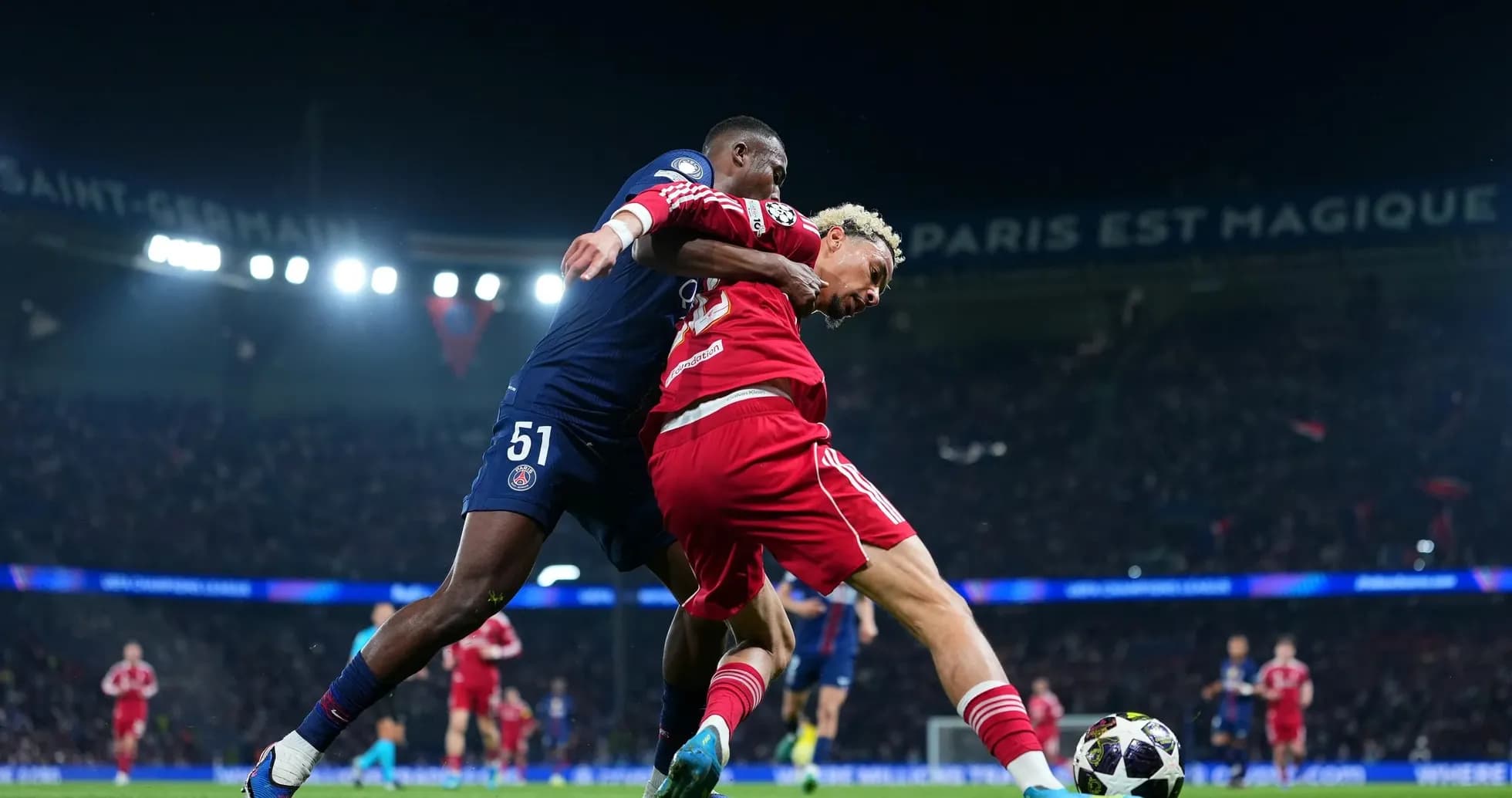
On a cool April night at Parc des Princes, Paris Saint Germain dismantled Liverpool 2–0 and, in doing so, revealed a clash of identities that had been brewing all campaign in the UEFA Champions League quarter-finals.
On paper, Liverpool arrived as the more ruthless machine in this competition: 18 points from eight matches, six wins and a goal difference of +12. Their 24 goals in 11 Champions League outings this season, at 2.2 per game, had often overwhelmed opponents, particularly at Anfield where they average 3.0 goals. Yet in Paris, it was PSG’s more balanced, possession-heavy side that dictated the tempo, leaning on a 4-3-3 that has become their default shape across 13 European fixtures.
Luis Enrique’s team came into the tie with a quietly imposing statistical profile: 36 goals in 13 Champions League matches, a 2.8 goals-per-game attack, and a defence conceding just 1.3 per outing. At home that profile sharpens further – 2.9 scored and 1.4 conceded – and the quarter-final first leg followed that script. Liverpool’s away record, three wins and three defeats with only five goals conceded in six road games, suggested resilience, but they were stretched here by the sheer variety of PSG’s attacking lanes.
First Half
The first half underlined that contrast. PSG, who have failed to score in only one Champions League match so far, pinned Liverpool’s 3-5-2 back with width from Achraf Hakimi and Nuno Mendes and the roaming threat of Khvicha Kvaratskhelia. The breakthrough before the interval, reflected in the 1–0 half-time score, felt like the natural product of a side used to sustaining pressure. Liverpool, who to date concede just 1.0 goal per Champions League match, were forced into a reactive posture they rarely adopt domestically.
If the big picture favoured Liverpool’s season-long ruthlessness, the micro-details of this tie belonged to PSG’s structure and star power.
The absences framed the tactical voids. PSG were without B. Barcola (ankle), Q. Ndjantou (muscle) and F. Ruiz (knee) – three options who would have added verticality and midfield rotation. Instead, Enrique doubled down on control: Vitinha, João Neves and Warren Zaïre-Emery formed a midfield triangle built to keep the ball and compress transitions, rather than chase chaos.
Liverpool’s list was longer and more disruptive to their identity. Alisson’s muscle injury meant G. Mamardashvili started in goal, altering the build-up dynamic and the last line of resistance. Without Wataru Endo (foot) and Stefan Bajcetic (hamstring), Arne Slot’s side lacked a natural holding midfielder, forcing Alexis Mac Allister and Ryan Gravenberch to share defensive responsibilities. The absences of Conor Bradley, G. Leoni and R. Williams reduced defensive depth, while H. Davies’ “inactive” status underlined how thin the backline options were.
Disciplinary Trends
Disciplinary trends also shaped the risk calculus. PSG’s yellow cards this season skew heavily towards the closing stages: 37.50% between 76–90 minutes and another 25.00% in the 91–105 window, with an earlier spike (25.00%) between 16–30. Two red cards in the competition, split between 31–45 and 91–105, underline how their aggression can boil over as intensity rises. Liverpool’s bookings are more spread but still peak between 31–75 minutes, with three yellows in each 31–45, 46–60 and 61–75 windows (21.43% each). Across a tight knockout tie, that matters: PSG can weaponise late pressure against a Liverpool side that tends to pick up cautions in the heart of the contest.
Within that framework, the narrative matchups were decisive.
“The Hunter vs. The Shield” tilted Parisian. Kvaratskhelia, fifth-ranked in the Champions League by rating, is PSG’s attacking spearhead: eight goals and four assists in 12 appearances, averaging a shot on target every 66 minutes and completing 19 of 36 dribbles. His duel with Virgil van Dijk and Ibrahima Konaté was the headline act. Liverpool’s overall defensive record – 11 conceded in 11 matches, with just five away – suggested they could neutralize elite forwards, but Kvaratskhelia’s blend of volume (24 shots) and efficiency (50% on target) repeatedly forced them into recovery runs rather than proactive defending.
Behind him, Vitinha functioned as the metronome and secondary scorer. With six goals and one assist, plus 1,402 passes at 94% accuracy, the Portuguese midfielder blurred the line between playmaker and finisher. His penalty record – one scored, one missed – removes any illusion of flawless ruthlessness from the spot, but from open play he has been among the most influential midfielders in the tournament. Against Liverpool’s less natural double pivot, his ability to receive between the lines and recycle under pressure helped PSG dismantle Liverpool’s midfield screen.
On the flanks, Hakimi embodied the “Engine Room Duel” from a different angle. Though listed as a defender, his five assists and 20 key passes make him PSG’s leading provider. His battle with M. Kerkez and the wider Liverpool shape was as much about territory as chance creation. When Hakimi advanced, Liverpool’s 3-5-2 was dragged into a back five, forcing Jeremie Frimpong deeper and blunting one of Slot’s main transition outlets.
Liverpool’s Response
Liverpool’s response hinged on Dominik Szoboszlai. Ranked 11th in the competition, the Hungarian has five goals and four assists, with 27 key passes and 18 tackles. He is both creator and first presser, an enforcer in the high block. But without a natural holding midfielder behind him, Szoboszlai’s energy was often spent plugging gaps rather than orchestrating. His duel with Zaïre-Emery and Neves in the half-spaces was one Liverpool never fully controlled.
Depth threatened to alter the script. From the bench, PSG could call on Gonçalo Ramos, Lee Kang-In, Lucas Hernández and Illia Zabarnyi – a blend of penalty-box presence, technical craft and defensive reinforcement. Liverpool’s options were, on paper, even more explosive: Mohamed Salah, Federico Chiesa, Cody Gakpo and Alexander Isak offered four distinct goal threats, with Andrew Robertson adding thrust from left-back. The substitutions vector – “[IN] came on for [OUT]” – gave Slot multiple ways to tilt the tie towards a shootout.
Yet PSG’s statistical base suggested they were better built to manage that chaos. Four clean sheets in 13 Champions League matches, split evenly between home and away, reflect a defence that bends but rarely breaks. They have conceded 17 in total, but their ability to keep opponents scoreless in key spots has underpinned a run of three straight wins at various points this campaign. Liverpool, by contrast, have already failed to score three times – all away from home – a warning sign that their attack can be neutralized on the road.
The deciding factor across this quarter-final leg was the intersection between PSG’s attacking peak and Liverpool’s conceding profile. Paris average close to three goals at home; Liverpool concede 0.8 away in this competition but have shown vulnerability in heavy defeats (notably a 2–0 away loss and 1–4 at home in their worst nights). When PSG raised the tempo after the break, they exploited that fragility, adding the second goal that turned a tight contest into a controlled 2–0.
Looking Ahead
Looking ahead to the return leg, the statistical prognosis leans towards PSG’s control and Liverpool’s need for volatility. Slot’s side will have to transform Anfield into a 3.0-goals-per-game cauldron again, leaning heavily on Salah and Szoboszlai to dismantle a PSG defence that, so far this campaign, has shown a growing capacity to neutralize exactly this kind of high-powered attack.