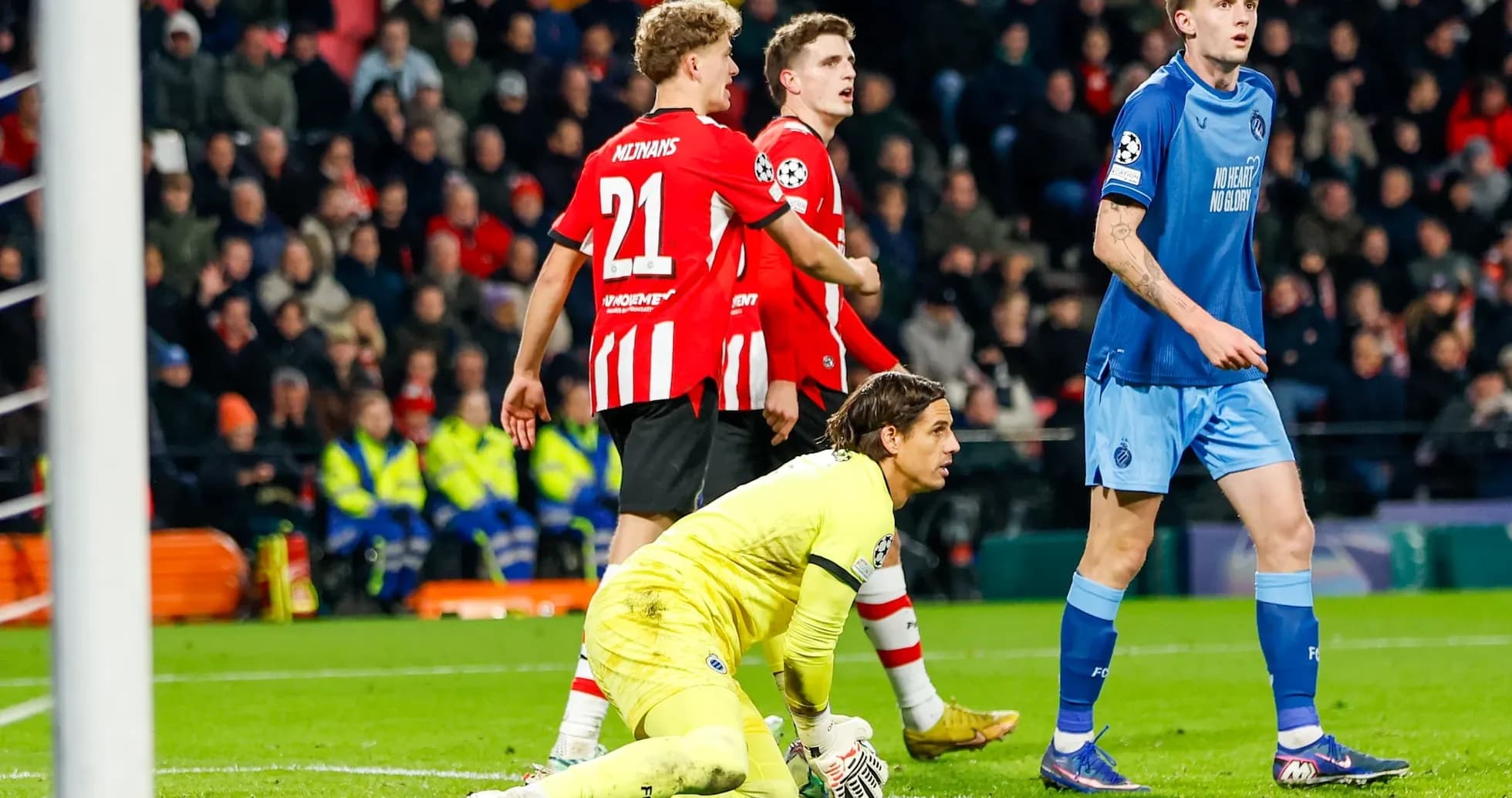
PSV Eindhoven vs Club Brugge: UEFA Champions League Showdown
Under the Philips Stadion lights, this was billed as a crossroads night in the League Stage – Round 4 of the UEFA Champions League. PSV Eindhoven, 24th in the overall table with 4 points and a goal difference of -1 heading into this game, were trying to steady a faltering European campaign. Club Brugge KV arrived as one of the form sides of the competition: 9 points, a goal difference of 4, and a swagger built on three wins from their first four matches.
The 2–1 away win to the Belgians confirmed the direction of travel for both projects. Overall this campaign, PSV had scored 3 and conceded 4 before kick-off; Club Brugge had struck 11 and allowed 7. The numbers told of a side from Eindhoven that needed control and caution to stay alive, and a visiting team that thrived in chaos and surges of momentum.
Peter Bosz leaned into what has become his European blueprint: a 4-2-3-1 that tries to compress the game into short, intense passing phases. M. Kovar started in goal behind a back four of S. Dest, L. Geertruida, A. Obispo and F. Kostic. In front of them, K. Sano and Mauro Junior formed the double pivot, with an attacking line of I. Perisic, S. Mijnans and R. van Bommel supporting G. Til as the nominal striker.
On paper, this shape suited PSV’s statistical identity. All 3 of their goals in the competition before this match had come between minutes 46 and 60 – a pure second-half surge. The double pivot was meant to protect them through the more fragile early phases, when they had conceded 1 goal between 16-30 minutes and another between 31-45, then allow the attacking four to accelerate after the interval. At home, they had been averaging 1.0 goal scored and 1.5 conceded per match; the plan was to narrow that defensive gap without blunting their post‑half‑time punch.
But the absences bit hard. S. Lammers, A. Nagalo, S. Ouaissa, A. Plea, J. Schouten and P. Wanner were all ruled out for PSV, stripping Bosz of depth in every line. The missing of Plea’s penalty-box craft and Schouten’s midfield control was particularly acute for a side that had already missed their only penalty of the campaign – 1 taken, 0 scored, 1 missed. There was no safety net if the starting eleven could not solve Club Brugge’s press.
Ivan Leko, by contrast, arrived with a more settled core and a clear identity. Club Brugge set up in a 4-1-4-1, with Y. Sommer in goal; a back four of K. Sabbe, J. Spileers, B. Mechele and J. Seys; F. Potts anchoring; and a dynamic band of four – C. Forbs, H. Vetlesen, H. Vanaken and J. Virgili – supplying lone forward N. Tresoldi.
This structure was designed to weaponise their most dangerous pattern: explosive middle and late-middle periods. Overall this season, Club Brugge had scored 5 of their 11 goals between minutes 61-75 (45.45%) and another 3 between 16-30 (27.27%). They were less about slow suffocation and more about sudden, violent bursts of pressure. Tresoldi embodied that edge: 5 goals in 4 appearances, with 13 shots (8 on target), and a cool head from the spot – 2 penalties taken, 2 scored, no misses.
The “Hunter vs Shield” duel here was Tresoldi against a PSV defence that, overall, had conceded 4 goals from 4 matches – 1.0 per game – but with clear soft spots. They had allowed 1 goal between 16-30 minutes, 1 between 31-45, and 2 between 61-75. That late-mid period, precisely where Club Brugge are at their most ruthless, was a glaring tactical intersection: Brugge’s storm against PSV’s wobble.
Behind Tresoldi, Carlos Forbs was the conductor and disruptor rolled into one. With 2 goals, 2 assists, 9 key passes and 18 attempted dribbles (6 successful), he arrived as one of the competition’s most influential wide creators. His duel with F. Kostic down PSV’s left was the “Engine Room” in wide zones: Forbs looking to isolate, drive inside, and feed Tresoldi, while Kostic had to balance his forward thrusts with the risk of leaving L. Geertruida exposed in the half-space.
In central areas, H. Vanaken and H. Vetlesen worked against K. Sano and Mauro Junior. PSV’s double pivot needed to keep the ball moving quickly enough to prevent Potts from screening passes into Til and Perisic, while also tracking Vanaken’s late arrivals. Any lapse risked opening the channels that Brugge exploit so well in those 61-75 minute surges.
Discipline and game management were always going to matter. PSV’s yellow cards this season have been spread across the second half, with 28.57% between 31-45, another 28.57% between 61-75, and 28.57% between 76-90. Club Brugge, for their part, cluster 41.67% of their bookings between 61-75 and 25.00% between 76-90. The same window in which Brugge score most and PSV concede most is also when tempers and fatigue spike. It is the storm zone of any match between these two.
From a statistical prognosis, the patterns pointed towards what the scoreboard eventually reflected. Club Brugge came in scoring 2.8 goals per match overall and conceding 1.8, with no games where they failed to score. PSV, by contrast, averaged just 0.8 goals overall and 1.0 conceded, with only 1 clean sheet and 1 match where they failed to score. The Belgians’ away profile – 3.0 goals scored and 2.0 conceded on their travels – suggested a game where they would accept risk to impose their attacking rhythm.
The final 2–1 away win for Club Brugge fit the underlying logic. PSV’s structure and spirit kept them in it, but the weight of absences, a fragile penalty record, and their vulnerability in the very phases where Brugge are most dangerous all converged. Tresoldi’s cutting edge and Forbs’ creative engine tilted the night, and with it, the trajectory of both clubs’ Champions League campaigns.