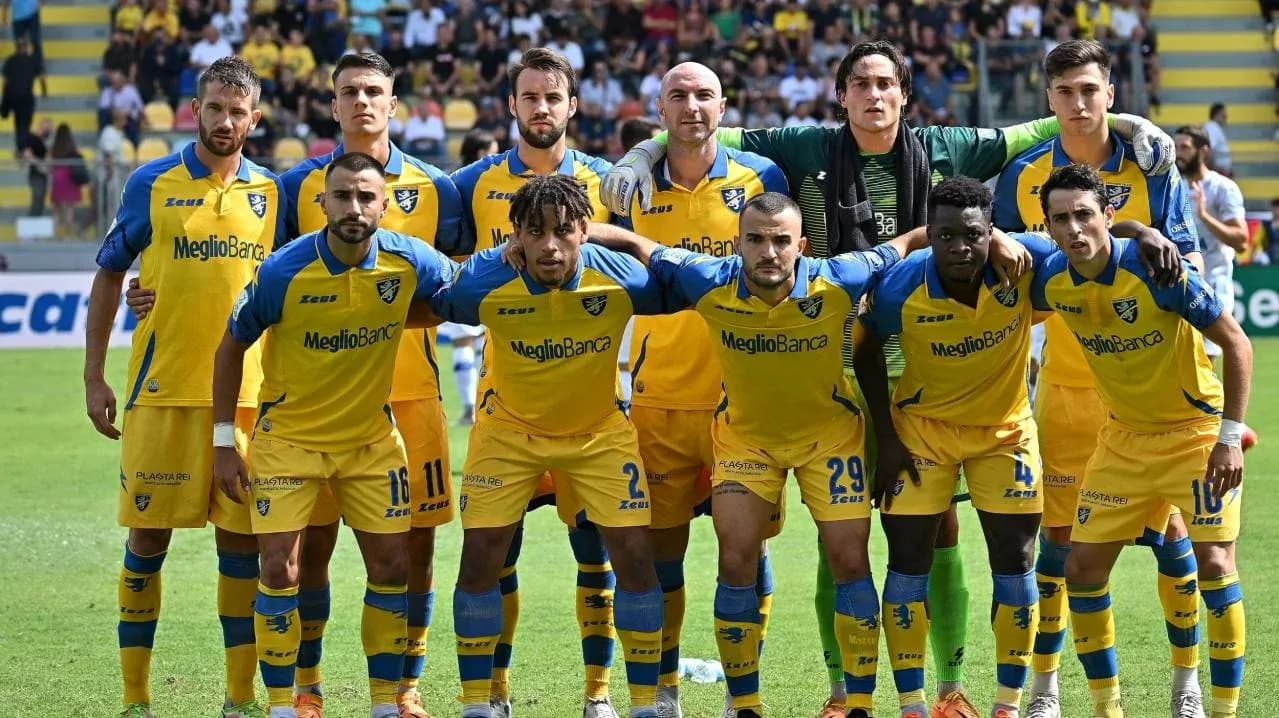
Sassuolo's Season Finale: A 3-2 Defeat to Lecce
The lights went out on Sassuolo’s home season with a sting. At the MAPEI Stadium – Città del Tricolore, Fabio Grosso’s side fell 3–2 to Lecce in a match that distilled an entire Serie A campaign into 90 minutes: attacking flair, defensive fragility, and a late-game emotional unraveling.
Following this result, the table tells a stark story. Sassuolo sit 11th on 49 points, their overall goal difference at -3, the product of 46 goals scored and 49 conceded across 37 matches. Lecce, by contrast, cling to survival in 17th on 35 points, their overall goal difference a bruising -23 from 27 goals for and 50 against. One side mid-table but maddeningly inconsistent; the other living on the edge, grinding every point out of a season-long relegation fight.
I. The Big Picture: Structures and Seasonal DNA
Grosso doubled down on Sassuolo’s identity with a 4-3-3, the club’s default shape this season (used 35 times). S. Turati behind a back four of W. Coulibaly, Pedro Felipe, T. Muharemovic and U. Garcia set the base. In midfield, K. Thorstvedt and N. Matic flanked I. Kone, with a front three of D. Berardi, M. Nzola and A. Lauriente.
It is a system built to sustain their attacking averages: at home this campaign Sassuolo have scored 25 goals in 19 matches, an average of 1.3 per game, while conceding 26 at 1.4 per home match. They create enough to win, but leave just enough space to be punished.
Eusebio Di Francesco mirrored his own attacking instincts with Lecce in a 4-2-3-1. W. Falcone in goal, a back line of D. Veiga, J. Siebert, Tiago Gabriel and A. Gallo, double pivot Y. Ramadani and O. Ngom, with S. Pierotti, L. Coulibaly and L. Banda behind lone striker W. Cheddira. It is the club’s most used structure this season (21 times), and a pragmatic compromise between solidity and transition.
On their travels, Lecce’s offensive output has been modest but not toothless: 15 away goals in 19 matches, an average of 0.8, against 26 conceded at 1.4. The 3–2 here sits above their usual attacking level and right in line with their defensive vulnerability.
II. Tactical Voids: Absences and Discipline
Both managers entered this fixture with key absences that shaped the bench and the emotional balance of the side.
Sassuolo were without D. Boloca (muscle injury), F. Cande and E. Pieragnolo (both knee injuries), as well as F. Romagna and A. Vranckx (both listed inactive). S. Walukiewicz was sidelined with a leg injury. That cluster of defensive and midfield absences pushed Grosso toward a relatively thin rotation in the back line and central areas; the bench leaned attacking with A. Pinamonti, L. Moro and A. Fadera all available, but fewer like-for-like defensive options.
Lecce, meanwhile, missed M. Berisha (thigh injury) and R. Sottil (back injury), both potentially useful rotation pieces in attacking and midfield zones. Di Francesco’s bench was deep in numbers but, without Sottil, a little lighter on proven top-flight creativity.
Discipline has been a season-long subplot for both sides and it bled into the narrative here. Sassuolo’s yellow-card profile shows a pronounced late-game spike: 29.63% of their league yellows arrive between 76–90 minutes, a period where fatigue and frustration converge. Lecce mirror that trend with 29.85% of their yellows also in the 76–90 window. This match, decided in the fine margins of the second half, unfolded against that backdrop of emotional volatility.
Individually, the tone-setters are clear. For Sassuolo, K. Thorstvedt has collected 8 yellows this season, and N. Matic brings 7 yellows plus 1 red. For Lecce, Y. Ramadani and Danilo Veiga have each amassed 9 yellows. These are the players who live on the disciplinary edge while anchoring their teams’ structures.
III. Key Matchups: Hunter vs Shield, Engine Room Battles
The “Hunter vs Shield” duel was defined more by profiles than by a single moment. Sassuolo’s top scorer A. Pinamonti started on the bench but loomed over the contest. Across the campaign he has 9 league goals and 3 assists, taking 57 shots with 30 on target. He is also a lightning rod for high-stakes moments: he has won 1 penalty but missed from the spot once, a reminder that Sassuolo’s penalty record this season is not flawless despite the team’s overall 100.00% conversion in the league statistics (2 scored from 2 at team level, but Pinamonti’s individual miss sits outside that narrow sample).
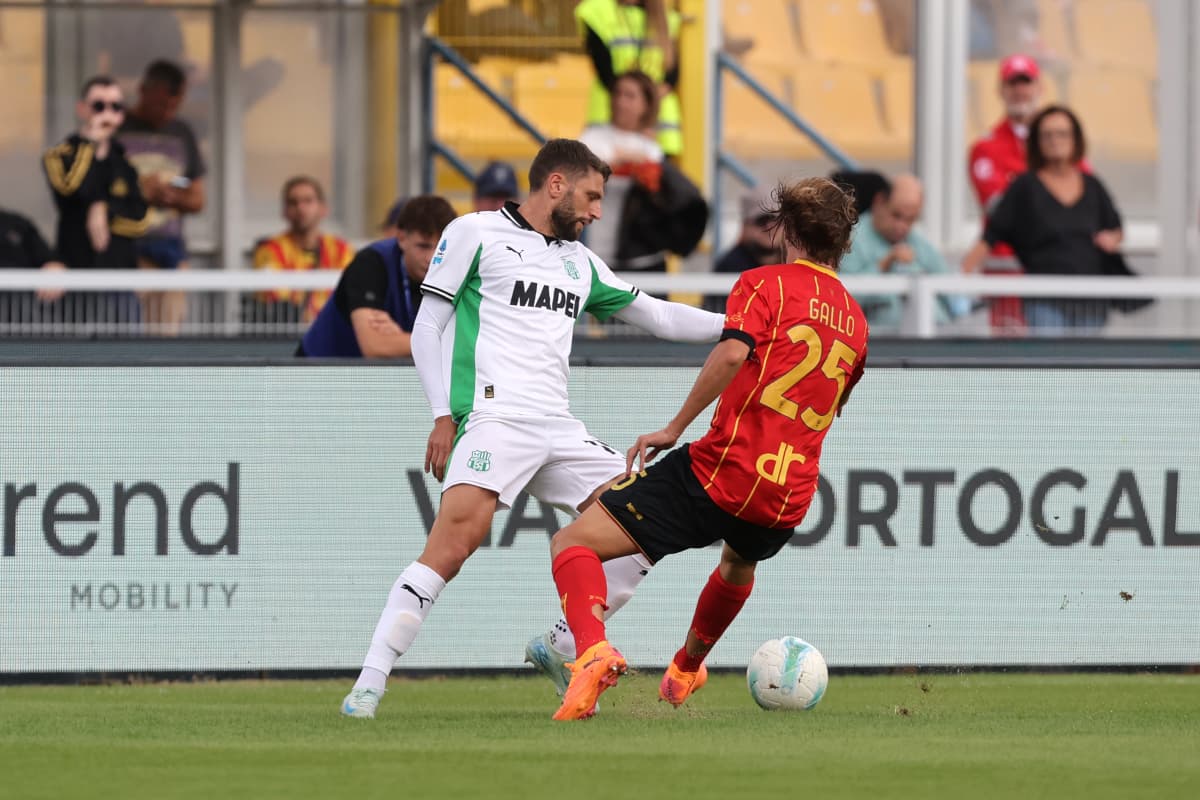
Berardi, starting on the right, brought his own cutting edge: 8 goals and 4 assists this season, 33 shots and 20 on target, with 2 penalties scored and 1 missed. Against a Lecce defence conceding 1.4 goals per away game, the plan was clear: isolate Berardi against A. Gallo or drive him inside at J. Siebert and Tiago Gabriel.
On the other side, Lecce’s attacking thrust was channeled through L. Banda and W. Cheddira. Banda’s season – 4 goals, 4 assists, 83 attempted dribbles with 32 successful – made his duel with W. Coulibaly on Sassuolo’s right flank a true knife-edge. Coulibaly’s task was to contain Banda’s direct running while still providing width in buildup, a balance that would define how often Lecce could spring into transition.
In the engine room, the confrontation was brutal and constant. N. Matic, with 1699 passes and 20 key passes this season at an 86% accuracy, is Sassuolo’s metronome and shield. His duel with Y. Ramadani – 1412 passes, 90 tackles, 46 interceptions – was a clash between a deep-lying playmaker and a pure destroyer. Ramadani’s 42 fouls committed and 9 yellows underline his willingness to break rhythm at any cost; Matic’s own 24 fouls and 1 red show he is not shy of the dark arts either.
Behind them, Thorstvedt operated as the advanced engine: 4 goals, 4 assists, 32 key passes and 13 blocked shots this season. His ability to break lines and arrive late in the box was Sassuolo’s main central threat against a Lecce back four that, overall, has conceded 50 goals in 37 matches.
IV. Statistical Prognosis and Tactical Verdict
Following this result, the numbers confirm what the pitch suggested: Sassuolo are an open, entertaining side whose attacking averages (1.2 goals per game overall, 1.3 at home) are undercut by a defence conceding 1.3 overall and 1.4 at home. Lecce’s 3 goals here spike their usual away average of 0.8, but do not disguise a season where they have failed to score in 19 league matches and rely heavily on moments rather than sustained pressure.
Defensively, Sassuolo’s 8 clean sheets overall and Lecce’s 9 show both can shut games down, but rarely do so consistently. The late-card surges for both sides suggest that tight contests, like this 3–2, are often decided in chaotic final phases rather than controlled game states.
Tactically, the match underlined a simple equation: Sassuolo’s high-variance 4-3-3, powered by Berardi, Lauriente and the passing of Matic, can overwhelm mid-table opponents but leaves too many doors open against desperate, transition-ready teams like Lecce. Di Francesco’s 4-2-3-1, anchored by Ramadani’s work rate and Banda’s verticality, thrives when the game becomes stretched.
In xG terms, a contest that finishes 3–2 between a side averaging 1.3 home goals and one averaging 0.8 away goals likely tilted slightly above the expected offensive output for Lecce, but sat squarely in the danger zone Sassuolo have inhabited all season: enough chances created to justify hope, enough defensive lapses to turn it into regret.