Sunderland vs Arsenal: Tactical Analysis of the 2–0 Victory
Under the Stadium of Light floodlights, this was billed as a reality check for Sunderland and a statement opportunity for Arsenal. By full time, a 2–0 away win had confirmed the league leaders’ authority, but the story of the night was written in the details of two very different 4‑2‑3‑1 interpretations.
I. The Big Picture: Structures, Context, and Seasonal DNA
Heading into this game, Sunderland were feeling their way back into Premier League life. Four points from four matches, a goal difference of −2 (3 scored, 5 conceded overall), and a record that already hinted at tight margins: at home, one win and one defeat, with just 1 goal for and 2 against. Their season template was clear in the numbers: only 0.8 goals scored per match overall, 1.3 conceded, and a heavy reliance on defensive organisation and set structure.
Arsenal arrived as the antithesis: four wins from four, top of the table with 12 points and a goal difference of +7 (8 scored, 1 conceded overall). On their travels, they had been immaculate: 2 away wins from 2, 3 goals scored, none conceded, and an away scoring average of 1.5 goals per game against 0.0 conceded. The league’s form side, playing with the assurance of a team whose 4‑2‑3‑1 is now muscle memory.
Both coaches doubled down on that shape. Régis Le Bris built Sunderland with R. Roefs behind a back four of N. Mukiele, K. Danso, D. Ballard and Reinildo, shielded by G. Xhaka and N. Sadiki. Ahead, T. Meunier, E. Le Fée and N. Angulo floated behind lone forward B. Brobbey. It was a line‑up designed for compactness, quick counters and set‑piece threat.
Mikel Arteta mirrored the formation but not the intent. David Raya anchored a back line of B. White, E. Konsa, Gabriel Magalhães and R. Calafiori. In front, D. Rice and M. Lewis‑Skelly formed the double pivot, freeing a high‑class attacking band of B. Saka, M. Ødegaard and C. Tzolis to support K. Havertz.
II. Tactical Voids: Absences, Discipline, and Hidden Fault Lines
Both squads carried scars into the fixture. Sunderland were without H. Diarra (hamstring) and R. Mundle (knee), robbing Le Bris of rotation options in the wide and midfield channels. For a team already struggling to score, that absence of alternative profiles on the flanks narrowed their tactical palette; the bench options in attack – C. Talbi, M. Fofana and W. Isidor – were more like-for-like depth than game‑changing variety.
Arsenal’s defensive depth was tested by the absence of W. Saliba (back injury) and C. Mosquera (muscle injury). That made E. Konsa’s partnership with Gabriel Magalhães more than a stopgap: it was a stress test for a reconfigured central pairing in a hostile away environment. The fact that Arsenal had conceded only 1 goal in 4 league games overall, and none away, suggested that their defensive system – more than any single centre‑back – was doing the heavy lifting.
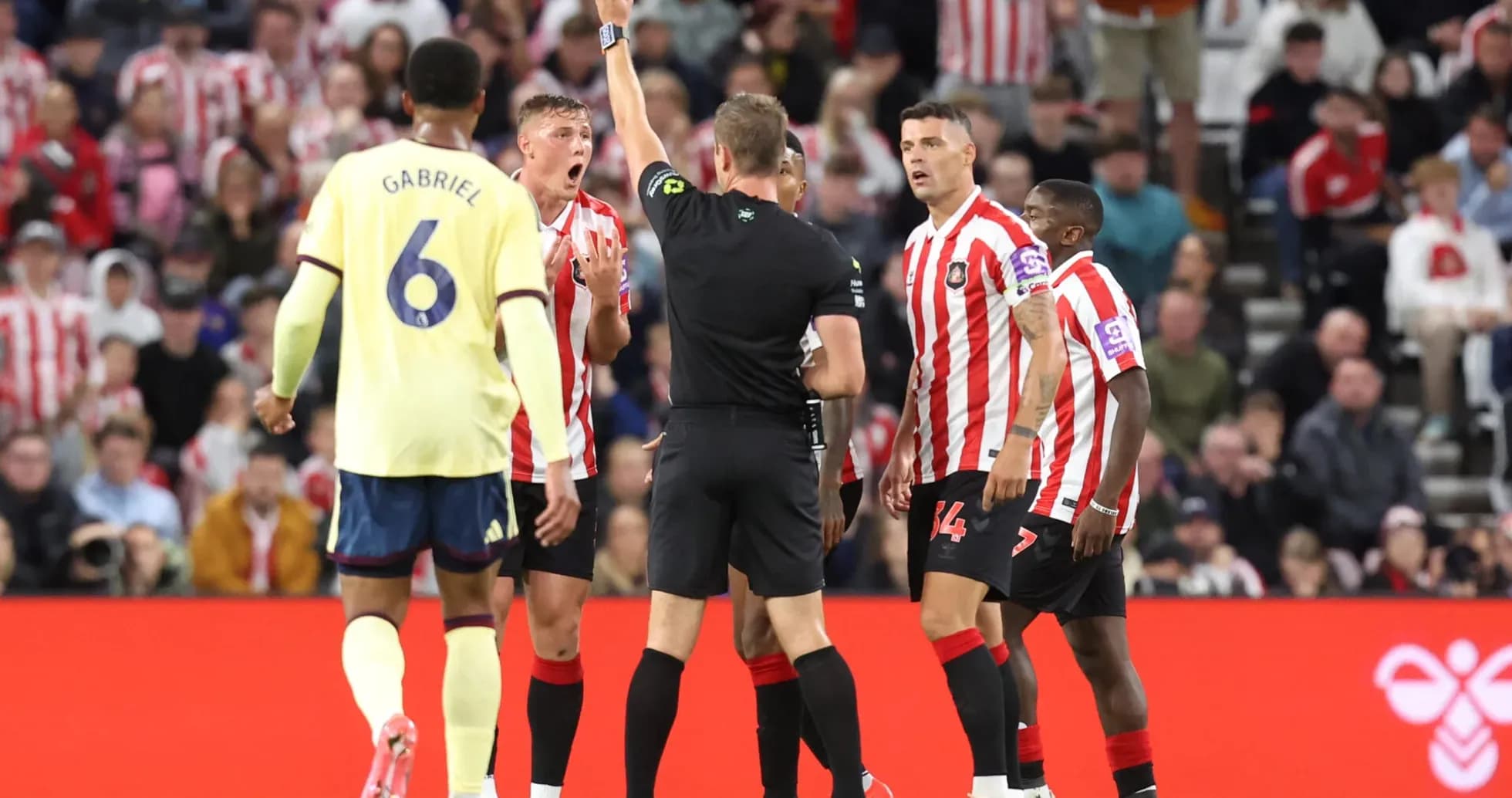
Discipline loomed as an undercurrent. Sunderland’s season card profile was already spiky: yellow cards spread across the match but peaking between 61–75 minutes with 30.00% of their cautions, and another 20.00% in the final 76–90 stretch. Worse, their only red card this season had come in stoppage time between 91–105 minutes, a sign of emotional strain as games slip away. Reinildo embodied that edge: 1 red and 1 yellow in 4 appearances, with 8 fouls committed.
Arsenal, by contrast, were controlled but not timid. Their yellow cards clustered around the end of the first half (31–45 minutes, 28.57%) and deep into stoppage time (91–105 minutes, 42.86%), pointing to a side that manages transitions and tactical fouls when the game state demands it. C. Tzolis, with 2 yellows already, walked a fine line on the left but has so far avoided dismissal.
Sunderland’s penalty record added another layer of fragility: 2 penalties awarded this season, only 1 scored and 1 missed. That 50.00% conversion rate is more than a statistic; it speaks to a side that cannot afford to squander their rare high‑value chances.
III. Key Matchups: Hunter vs Shield, Engine Room vs Enforcer
The headline duel was always going to be Arsenal’s attacking “hunter” line against Sunderland’s defensive “shield”.
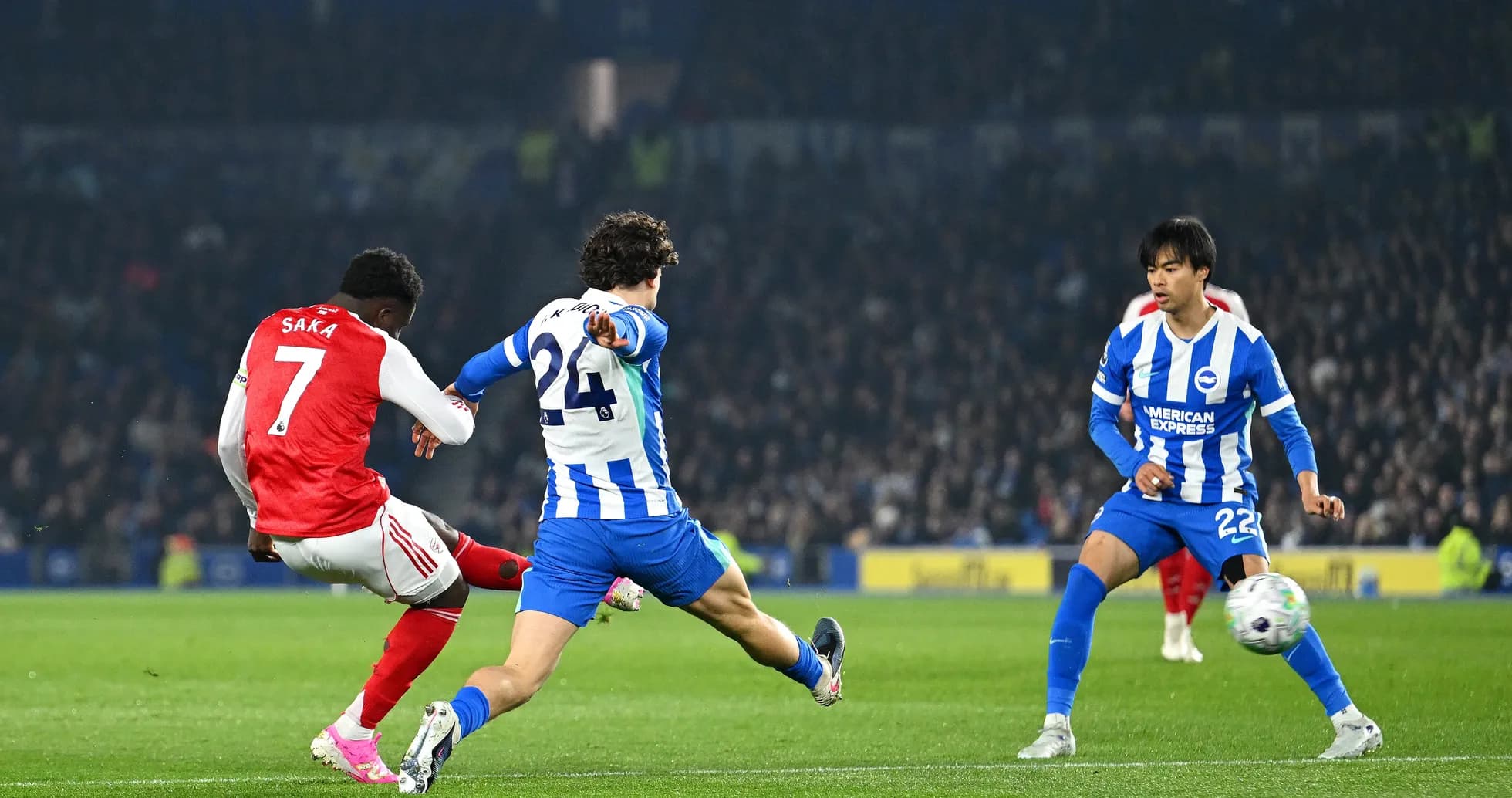
Bukayo Saka arrived as one of the league’s sharpest weapons: 3 goals in 4 appearances, 10 shots with 8 on target, and 1 penalty scored from 1 taken. His duel with Reinildo and D. Ballard down Sunderland’s right‑side defence was pivotal. Ballard’s profile – 63 duels contested and 33 won, 2 blocked shots, 2 interceptions – underlines his willingness to engage, but also hints at volume defending under pressure. Against Saka’s 42 duels and 25 wins, the flank was always going to be a zone of repeated collision.
In the half‑spaces, M. Ødegaard and K. Havertz formed a roaming axis against K. Danso and the deeper positioning of G. Xhaka. Ødegaard’s season numbers are those of a conductor in full flow: 2 goals, 197 passes at 90% accuracy, and 12 key passes in 4 matches. His subtle drift between Sunderland’s lines forced Xhaka into constant decision‑making: step out and risk leaving Sadiki exposed, or hold and allow Ødegaard time to pick passes into Havertz.
Xhaka himself was Sunderland’s “enforcer in chief”. Across 4 appearances he had made 6 tackles, 2 successful blocks and 5 interceptions, with 246 passes at 86% accuracy and 10 key passes. That blend of bite and distribution made his battle with D. Rice the engine‑room storyline of the night.
Rice, one of the league’s leading creators from deep with 2 assists, 288 passes at 91% accuracy and 6 key passes, was Arsenal’s metronome. His presence alongside the more elastic M. Lewis‑Skelly gave Arsenal a structural superiority in central zones: Rice could sit, recycle and switch, while Lewis‑Skelly stepped into pockets to overload Sunderland’s double pivot.
On the left, R. Calafiori’s season as an auxiliary playmaker from full‑back continued. With 2 assists already, 93 passes at 83% accuracy and 2 key passes, he provided underlaps and diagonals into Havertz and Tzolis, asking constant questions of Mukiele’s positioning and Meunier’s work rate tracking back.
IV. Statistical Prognosis and Tactical Verdict
Viewed through the lens of season data, Arsenal’s 2–0 away win felt like the logical extension of underlying trends.
Arsenal’s overall scoring rate of 2.0 goals per match, combined with Sunderland’s concession rate of 1.3 per game and 1.0 at home, pointed towards the visitors creating enough volume to find breakthroughs. On their travels, Arsenal’s 1.5 goals for and 0.0 against per match aligned almost perfectly with the final scoreline.
Defensively, Arsenal’s structure again held. With only 1 goal conceded in 4 league games overall, and 3 clean sheets (including 2 away), David Raya and his back four – even without Saliba – continued to smother opposition attacks. Sunderland’s overall attacking average of 0.8 goals per match, and just 0.5 at home, meant that any deficit would be difficult to overturn against such a disciplined unit.
The “critical intersection” between Sunderland’s card profile and Arsenal’s game management also told. With Sunderland prone to picking up 30.00% of their yellows between 61–75 minutes and another 20.00% late on, Arsenal’s tendency to force tactical fouls in those same phases allowed them to tilt the rhythm, protect leads and keep Sunderland chasing shadows rather than building sustained pressure.
In the end, the narrative of the night was one of a well‑drilled underdog meeting a fully realised contender. Sunderland’s 4‑2‑3‑1, anchored by the combative Xhaka, the industrious Ballard and the adventurous full‑backs, offered resistance but too little incision. Arsenal’s mirror system, powered by Rice’s control, Ødegaard’s craft and Saka’s cutting edge, translated superior xG potential and defensive solidity into a controlled, almost inevitable 2–0.
Following this result, Sunderland’s challenge is to add punch to their structure and reduce the self‑inflicted wounds of late cards and missed penalties. Arsenal’s task is simpler, and more daunting for the rest of the league: maintain this blend of ruthless efficiency and tactical maturity, and performances like this at the Stadium of Light will become the standard rather than the exception.