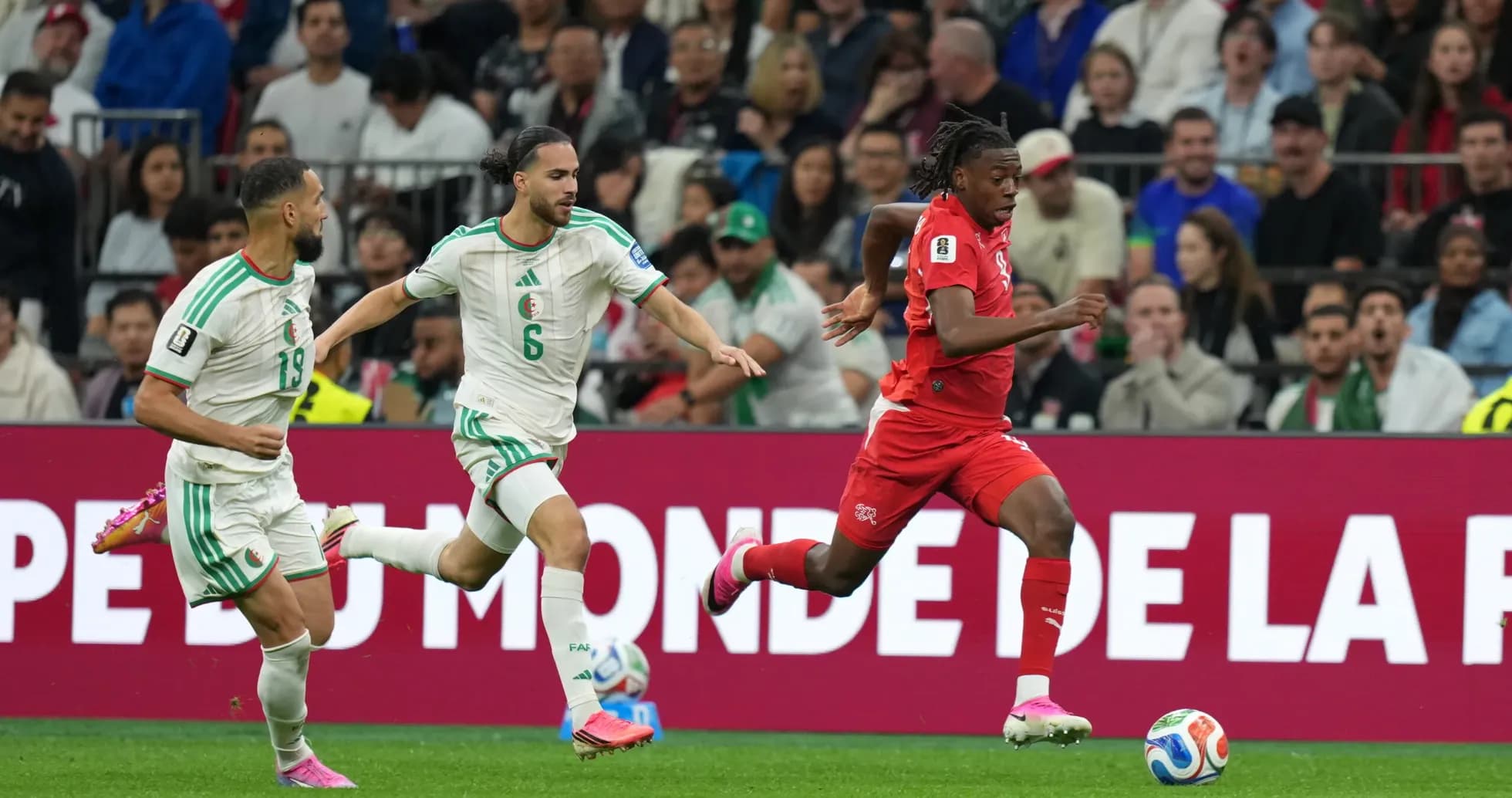
Switzerland Dominates Algeria in Round of 32 Clash
BC Place in Vancouver staged a Round of 32 tie that felt like a crossroads for two very different World Cup stories. Switzerland arrived as the polished group winners from Group B, top of their section with 7 points and a goal difference of 4 after 3 matches (7 scored, 3 conceded overall). Algeria, third in Group J with 4 points and a goal difference of -2 (5 for, 7 against overall), came in as a dangerous outsider: flawed but never dull.
Final Score: Switzerland 2, Algeria 0
The final score – Switzerland 2, Algeria 0 – confirmed the hierarchy hinted at by the season’s numbers. Overall this campaign, Switzerland had been one of the tournament’s most balanced sides: 4 matches played, 3 wins, 1 draw, 0 defeats. At home (neutral in World Cup terms but designated as home), they had played 3, won all 3, and scored 8 goals while conceding 2, an average of 2.7 goals for and 0.7 against at home. On their travels they had been more modest but still unbeaten, scoring 1 and conceding 1 across a single away outing. Algeria’s path had been more volatile: 4 matches in total, 1 win, 1 draw, 2 defeats, with 5 goals scored and 9 conceded overall. At home they averaged 3.0 goals for and 3.0 against, but away from home only 0.7 goals scored per match and 2.0 conceded – a fragile base on which to build an upset.
Switzerland's Formation
Murat Yakin doubled down on Switzerland’s identity with a 4-2-3-1 that looked almost tailor-made for knockout control. Gregor Kobel in goal sat behind a back four of Ricardo Rodriguez, Manuel Akanji, Nico Elvedi and Denis Zakaria. In front of them, Remo Freuler and Granit Xhaka formed the double pivot: one a metronome, the other the emotional and tactical compass.
Ahead of them, the shape was all about fluidity. Dan Ndoye started wide, Ruben Vargas on the opposite flank, and Johan Manzambi – one of the breakout stars of this World Cup – operating in the central attacking role behind Breel Embolo. Manzambi came into the night as one of the competition’s most efficient young creators: 4 appearances, 200 minutes, 3 goals and 2 assists overall, with a 7.7 average rating and 3 key passes across the tournament. He had taken 4 shots, 3 of them on target, and completed 5 dribbles from 14 attempts – a player comfortable receiving between the lines and turning pressure into penetration.
Algeria's Formation
Algeria, under Vladimir Petkovic, mirrored Switzerland’s ambition with a 4-3-3. Luca Zidane started in goal, shielded by a back four of Rayan Ait-Nouri, Ramy Bensebaini, Aissa Mandi and Rayan Belghali. In midfield, Ramiz Zerrouki, Nabil Bentaleb and Farès Chaibi were tasked with wrestling control away from Xhaka and Freuler. Up front, the quality was undeniable: Riyad Mahrez on the right, Houssem Aouar on the left, and Ilyes Maza through the middle.
On paper, this was a duel between a structured, high-functioning unit and a side whose ceiling was high but whose floor was worryingly low. Algeria’s season numbers told the story clearly. Overall they had conceded 9 goals in 4 matches, an average of 2.3 per game, and had yet to keep a single clean sheet either at home or away. They had also failed to score in 2 of their 4 outings overall, both on their travels. Switzerland, by contrast, had not failed to score once in 4 matches overall, and had kept 1 clean sheet at home while conceding just 3 goals in total (2 at home, 1 away).
Tactical Analysis
The tactical voids were subtle but significant. Switzerland were missing L. Jaquez through a muscle bruise, but Yakin’s core rotation remained intact; the spine of Kobel, Akanji, Xhaka, Freuler and Embolo was untouched. Algeria, without A. Benbouali due to a wound, lost one attacking option from the bench in a squad that already leaned heavily on Mahrez for incision and on Aouar for creative overloads.
Discipline was another undercurrent. Both sides had shown a tendency to collect cards in the same window: 66.67% of Switzerland’s yellow cards this tournament had arrived between 31 and 45 minutes overall, with the remaining 33.33% between 61 and 75 minutes. Algeria mirrored that exact distribution: 66.67% of their yellows overall also came in the 31–45-minute band, and 33.33% between 61 and 75. It created a predictable storm: a tight first half that risked boiling over just before the interval, then a second-half phase where legs and tempers both began to fray.
Match Dynamics
In the “Hunter vs Shield” matchup, Switzerland’s attack had the edge. Overall, they averaged 2.3 goals per game, driven not only by Manzambi’s 3 goals but also by Embolo’s dual threat. Embolo entered this tie with 2 goals and 2 assists overall, 6 shots (4 on target), and 8 key passes – a centre-forward who could both finish and serve as a playmaking fulcrum. He had also won 18 of 35 duels overall, a testament to his ability to occupy centre-backs physically and open channels for runners like Vargas and Ndoye.
Facing them was an Algerian defence that had already allowed 6 goals away from home and 3 at home this tournament, with their biggest away defeat a 3-0 loss. The numbers suggested that once broken, their structure could unravel quickly. Switzerland’s biggest home win, a 4-1, hinted at their capacity to accelerate once they sensed weakness.
Midfield Battle
In the “Engine Room” duel, Xhaka and Freuler against Bentaleb, Zerrouki and Chaibi was decisive. Switzerland’s ability to sustain pressure, recycle possession and keep their defensive line high had been central to their record of just 0.8 goals conceded per match overall. Algeria, with no clean sheets and a tendency to concede in bunches, needed their midfield three to be perfect in their pressing triggers and compactness. They were not.
With penalties, there was no hidden drama. Switzerland had taken 2 overall this campaign and scored both, a perfect conversion rate with no misses. Algeria had yet to win or take a penalty in the tournament, so the shootout narrative never really hovered over BC Place; the game was always more likely to be settled in open play.
Following this result, Switzerland’s seasonal profile looks exactly like what their 2-0 win suggested: a side with a clear structure, reliable end product and a defensive base that travels. Algeria exit as a team of moments rather than matches – capable of flashes, but over 90 minutes too porous and too inconsistent in both boxes.
The statistical prognosis always leaned red and white. A Swiss side averaging 2.3 goals for and 0.8 against overall, with Embolo and Manzambi in form, against an Algerian team conceding 2.3 per game and failing to score in half of their away fixtures, was a matchup tilted towards control rather than chaos. On the night in Vancouver, the numbers, the tactics and the narrative all converged: Switzerland’s structure suffocated Algeria’s volatility, and the Round of 32 became another step in a campaign that increasingly looks built for the late stages.