Udinese vs Cremonese: Tactical Showdown at Bluenergy Stadium
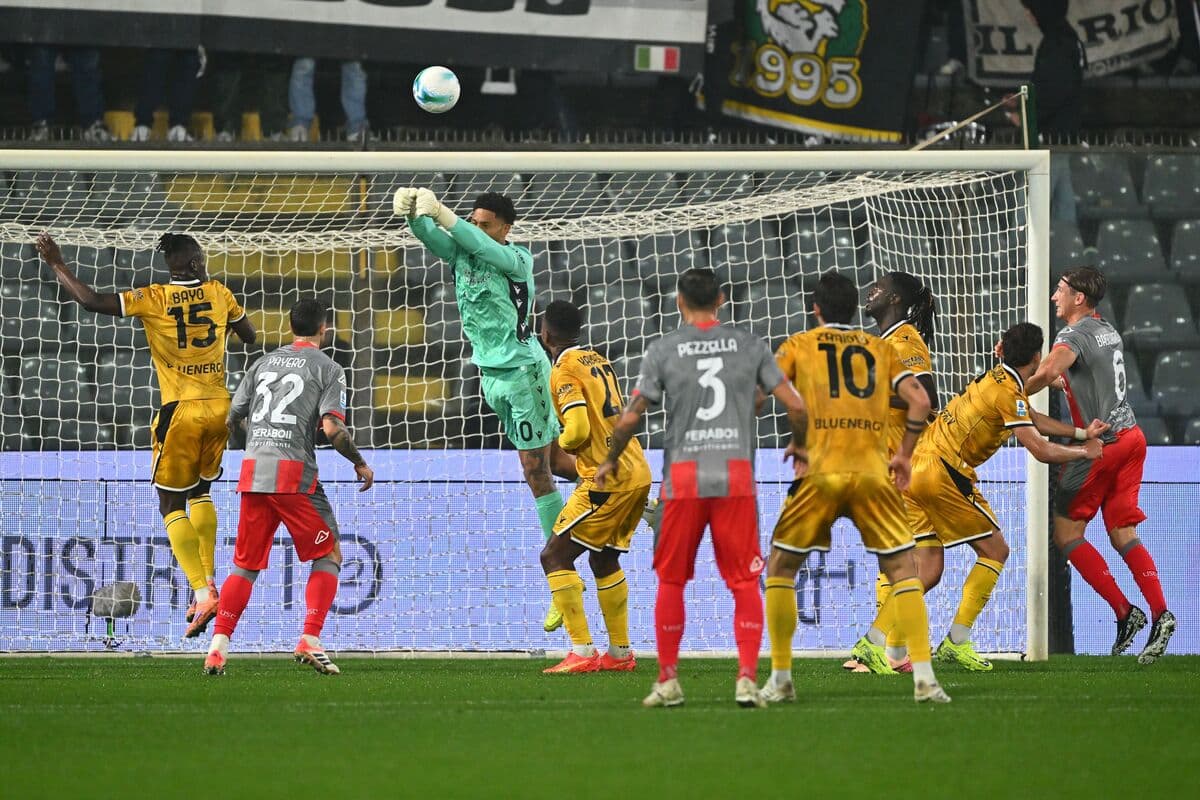
Bluenergy Stadium – Stadio Friuli closed its Serie A season with a study in contrasts: Udinese, 10th in the table on 50 points with an overall goal difference of -2, fell 0–1 at home to a Cremonese side clinging to 18th place and 34 points, their own overall goal difference a stark -22. Following this result in Round 37, it felt less like a dead rubber and more like a tactical referendum on two teams who have lived on opposite sides of the same fine margin all year.
Both coaches doubled down on their seasonal identities with matching 3-5-2s. Kosta Runjaic stayed loyal to the structure that has underpinned Udinese’s campaign: three centre-backs shielding a midfield line that tries to stretch horizontally before striking vertically. Marco Giampaolo mirrored the shape but not the intent, using the same numbers to construct a compact, survival-mode block.
For Udinese, the season’s statistical DNA was visible from the opening whistle. Overall they average 1.2 goals per game, but that splits sharply between 0.9 at home and 1.5 on their travels. At Bluenergy Stadium they have been functional rather than fluent: 18 home goals in 19 matches, with 21 conceded. The 0–1 defeat here slotted neatly, if frustratingly, into that pattern of narrow margins and low-scoring battles.
Cremonese, by contrast, arrived as a side built to suffer. Overall they score 0.8 goals per game – just 0.7 on their travels – while conceding 1.4 overall and 1.5 away. Their survival fight has been about eking out clean sheets (5 away, 11 overall) and clinging to games deep into the second half, where their attacking profile spikes. Across the season, 27.27% of their goals arrive between 76-90 minutes, and another 24.24% between 46-60. They are a team that grows into matches, even if they rarely overwhelm.
The tactical voids were significant on both sides. Udinese were stripped of creativity and thrust by the absences of K. Ehizibue (suspended for yellow cards), J. Ekkelenkamp (leg injury), N. Zaniolo (back injury), and A. Zanoli (knee injury). Zaniolo in particular is a structural loss: 5 goals and 6 assists in the league, 579 passes with 53 key passes, and a dribbling profile (94 attempts, 33 successful) that normally bends defensive lines out of shape. Without him, Runjaic’s 3-5-2 lacked a natural half-space aggressor and a late-arriving runner from midfield.
Cremonese had their own surgery at the back and in transition. F. Baschirotto (thigh), W. Bondo (muscle), F. Ceccherini (muscle), and F. Moumbagna (muscle) were all ruled out, forcing Giampaolo to trust a back three anchored by M. Bianchetti and S. Luperto, with the wings and second line of pressure shouldered by hard-running midfielders rather than specialist stoppers.
The disciplinary undercurrent framed the risk profile. Udinese’s season-long card map shows a pronounced spike in yellow cards between 61-75 minutes at 27.94%, followed by 22.06% from 76-90. They are a side that becomes increasingly stretched and reactive late on, often chasing games. Cremonese, meanwhile, see 26.09% of their yellows in the 76-90 window and carry a curious red-card pattern: two reds between 91-105 minutes (66.67% of their total) and another outside the usual minute ranges. Both squads, then, live dangerously as fatigue sets in.
Within that frame, the key matchups told the story.
The “Hunter vs Shield” duel pitted Keinan Davis against a fragile but desperate Cremonese defence. Davis has been Udinese’s reference point all season: 10 league goals and 4 assists, with 38 shots (25 on target) and 310 duels contested, 146 won. His physical profile and ability to draw fouls (47 won) are central to Runjaic’s plan to advance the block and create set-piece pressure. Yet Cremonese, conceding 1.5 goals per game away, managed to suffocate his supply. Without Zaniolo’s vertical carries and with Udinese’s home average stuck at 0.9 goals, Davis became more of a wrestling partner for Bianchetti and Luperto than a finisher.
At the other end, Federico Bonazzoli embodied Cremonese’s counter-punch. With 9 goals and 1 assist across 34 appearances, 55 shots (31 on target), and 242 duels (125 won), he is both finisher and first presser. His presence alongside J. Vardy allowed Giampaolo to threaten the channels behind Udinese’s high, three-man line. Udinese concede 1.3 goals per game overall, with a defensive vulnerability split between the 46-60 and 76-90 ranges (each 21.28% of their goals against). That aligns almost perfectly with Cremonese’s own late-game attacking surges, turning every transition after the interval into a potential dagger.
The “Engine Room” confrontation was just as decisive. Without Zaniolo, Udinese leaned on J. Karlstrom and L. Miller to dictate rhythm, flanked by A. Atta and H. Kamara. Their task was to outplay a Cremonese midfield built on graft: M. Thorsby’s running, A. Grassi’s distribution, and the dual-wing industry of Y. Maleh and G. Pezzella. Pezzella, one of the league’s standout card magnets with 8 yellows and 1 red, is also a defensive workhorse: 49 tackles, 11 interceptions, and 11 blocked shots. His lane-denial on the left blunted Udinese’s attempts to isolate Kamara and feed Davis early.
On the creative side for Cremonese, Jari Vandeputte waited on the bench as a tactical lever. Across the season he has 5 assists, 893 passes with 53 key passes, and a 77% accuracy rate. Introduced in the right phase, he offers the precise crossing and set-piece quality to punish a tiring Udinese back line that already concedes 1.1 goals per game at home.
From a statistical prognosis standpoint, the 0–1 scoreline felt like the logical endpoint of these trends. Udinese’s overall under/over profile shows only 5 matches over 2.5 goals and 32 under that line, while Cremonese have gone over 2.5 in just 3 of 37. Two cautious 3-5-2s, a home side that often fails to score (7 home games without a goal, 10 overall), and an away team that fails to score in 10 away fixtures created a narrow corridor for attacking expression. A low xG, attritional contest was always the likeliest script.
Following this result, the narrative is clear. Udinese remain a mid-table side whose structure is sound but whose home attacking ceiling is limited, especially without their primary creator. Cremonese, for all their flaws, have leaned into their late-game resilience and transitional threat, extracting maximum value from minimal attacking volume. In a league defined by fine details, this night in Udine underlined how tightly tactics, timing, and discipline can conspire to swing a season’s story by a single goal.