World Cup Group B Match Analysis: Qatar vs Switzerland
The World Cup’s opening rhythms in Group B began under the late-afternoon light of Levi’s Stadium, where Qatar and Switzerland shared a 1-1 draw that revealed as much about their tactical identities as the scoreline suggested. Following this result, both sides sit on 1 point, level in goals scored and conceded at 1-1 overall, but the routes they took to that balance were sharply contrasted.
I. The Big Picture – Two 4-3-3s, two different ideas
Both coaches declared their intentions with mirrored shapes. Julen Lopetegui sent Qatar out in a 4-3-3, a system the hosts have now used in all their World Cup minutes, and one that aims to blend compact defensive lines with quick, vertical transitions. Murat Yakin matched that structure with Switzerland’s own 4-3-3, but his version leaned more on controlled possession and structured progression.
For Qatar, the early tournament numbers sketch a fragile equilibrium. At home they have played 1 match, scoring 1.0 goals on average and conceding 1.0, with no clean sheets and no failures to score. The goal difference overall is 0, a statistical reflection of a side still searching for a defining edge. Switzerland’s profile is similar in outcome but different in flavour: on their travels they also average 1.0 goal for and 1.0 against, with a GD of 0 and a clean-sheet count of 0. Yet their single goal came from the spot, underlining a capacity to manufacture chances under pressure and to punish mistakes ruthlessly.
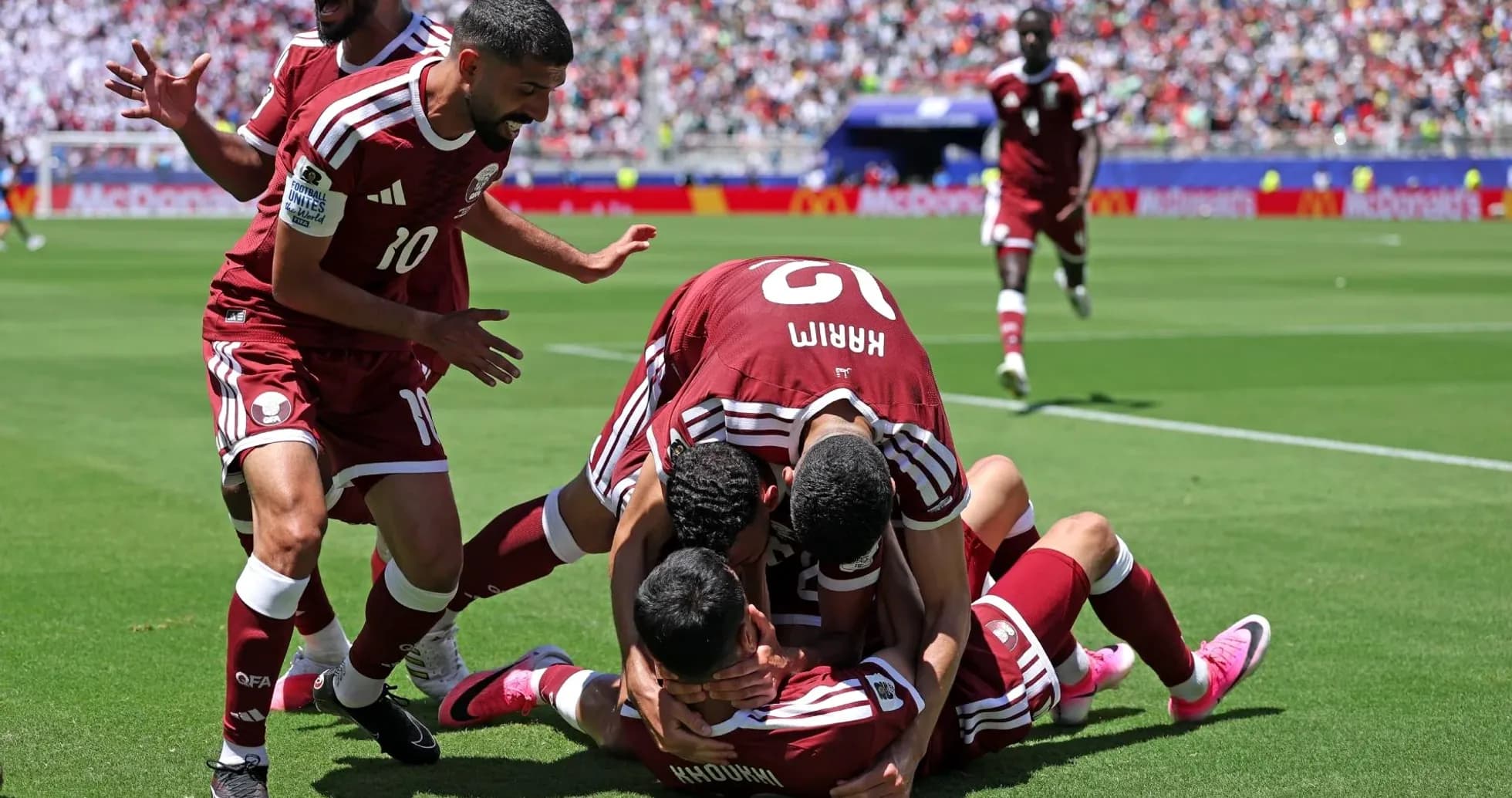
The match narrative mirrored those numbers. Switzerland struck first, with B. Embolo – already on the tournament scoring charts – converting a penalty, while Qatar’s response came through a set of collective adjustments rather than a single star turn.
II. Tactical Voids and Discipline – Edges in the margins
There were no listed absentees in the squad data, so both coaches had full decks to play with. The tactical voids, then, were not about who was missing, but about where each side still lacks clarity.
For Qatar, discipline is already a storyline. Their card distribution is brutally concentrated: 100.00% of their yellow cards so far have arrived between 16-30 minutes. In Santa Clara, that pattern was embodied by Jassem Gaber and Mahmud Abunada. Gaber, booked once, played 60 minutes of high-contact midfield work, committing 2 fouls and leaving the pitch with 1 yellow card but no red, despite his appearance on both yellow and red-card leaderboards. Abunada, too, walked the disciplinary tightrope: 1 yellow card, 1 foul committed, and a penalty conceded. The goalkeeper’s aggression outside his six-yard box and in one-v-one situations is both a weapon and a risk.
Switzerland’s disciplinary profile is calmer but not spotless. Their only yellow so far has landed in the 31-45 minute window, and it belongs to D. Zakaria. As a nominal right-back in the 4-3-3, Zakaria’s 3 tackles and 2 interceptions underline his role as an aggressive ball-winner on the flank, but his single booking hints at how thin the line is between proactive defending and over-commitment.
III. Key Matchups – Hunter vs Shield, Engine Room vs Enforcer
Hunter vs Shield
The clearest attacking axis for Qatar runs through Boualem Khoukhi, an unusual sentence for a centre-back. Yet heading into this game he emerged as their most decisive figure: 1 goal from 1 shot on target, 34 passes, and a defensive line anchored by 1 successful blocked shot and 2 interceptions. Khoukhi is not merely a stopper; he is a set-piece threat and an organiser, a defender who changes games in both boxes.
Opposite him, Switzerland’s shield is multi-layered. M. Akanji and N. Elvedi form the central spine, but it is Zakaria who gives the back four its bite. His 10 duels with 6 won, combined with 96% passing accuracy from 56 passes, show a player capable of both breaking lines and breaking up play. The duel between Qatar’s reliance on Khoukhi’s leadership and Switzerland’s collective defensive structure will define how much freedom the hosts can grant their forwards.
On the Swiss side, the hunter is already obvious: B. Embolo. With 1 goal, 1 penalty scored, 2 shots (1 on target), and 5 key passes from just 8 total passes, Embolo’s efficiency is striking. He does not need volume to hurt you; he needs moments. His ability to drop off, combine with D. Ndoye and R. Vargas, and then explode into the box makes him the reference point Qatar must solve.
Engine Room – Playmaker vs Enforcer
In midfield, the contest is more subtle but just as decisive. For Switzerland, G. Xhaka is the metronome, flanked by R. Freuler and M. Aebischer. While the raw numbers here are limited, the structure is clear: Xhaka sits central in the 3 of the 4-3-3, orchestrating tempo, while Freuler and Aebischer shuttle to connect with the front three.
Qatar’s response is a more combative trio. Gaber, with 8 duels and 3 won, plus 2 blocked shots, played as the enforcer, snapping into challenges and trying to disrupt Swiss rhythm. A. O. Madibo and I. Laye offered support lanes and attempted to bridge the gap to a front line of Edmilson Junior, Y. Abdurisag, and A. Afif. The problem for Qatar is that their midfielders are being asked to both protect and create; when they step out to press Xhaka, they leave spaces for Embolo to exploit between the lines.
IV. Statistical Prognosis – Margins, xG shadows, and what comes next
The raw xG figures are not provided, but the statistical shadows are clear. Switzerland’s single goal from a penalty suggests they can force high-value chances even when open play is cagey. Their penalty record – 1 total, 1 scored, 100.00% conversion, 0 missed – contrasts sharply with Qatar’s zero-penalty profile, and with Abunada’s record of conceding 1 penalty and saving none.
Defensively, both sides are porous in similar measure: 1.0 goals against on average overall, no clean sheets, and no period yet where they can claim consistent control. Qatar’s early yellow-card spike between 16-30 minutes hints at a side that struggles to manage the game’s first emotional surge, while Switzerland’s booking in the 31-45 window suggests their issues emerge when they push for control before half-time.
Projecting forward in this group, the margins are likely to remain thin. Switzerland, with Embolo’s penalty assurance and Zakaria’s dual role as defender and outlet, look marginally better equipped to tilt tight games on their travels. Qatar, by contrast, will lean heavily on Khoukhi’s two-way influence, Abunada’s shot-stopping (5 saves already), and the hope that their 4-3-3 can evolve from merely balanced to genuinely incisive.
Following this result, both teams are statistically level, but tactically, Switzerland appear closer to a stable identity. Qatar are still a work in progress – one whose fate may hinge on whether their aggression can be channelled into control, rather than into the referee’s notebook between 16 and 30 minutes.