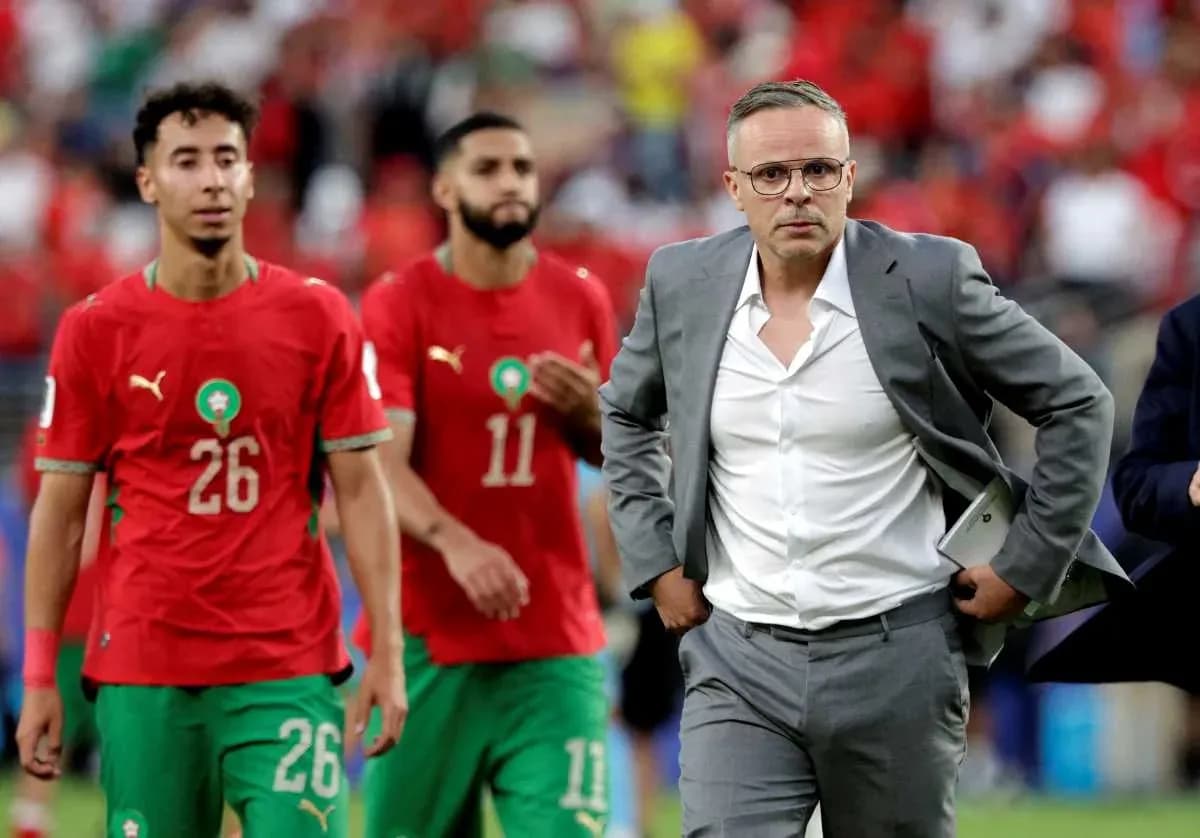
Brazil and Morocco Share Points in World Cup 2026 Opener
Under the New Jersey lights, Brazil and Morocco opened their World Cup 2026 accounts with a 1–1 draw at MetLife Stadium, a result that leaves Group C finely balanced and both sides on 1 point. Following this result, Brazil sit in the pack with a goal difference of 0 (1 scored, 1 conceded), their traditional aura intact but not yet fully unleashed. Morocco, also on 1 point and a goal difference of 0, leave East Rutherford with something more intangible: confirmation that their tactical evolution can stand up to the heavyweight nations.
Both coaches rolled out mirrored 4‑2‑3‑1 shapes, but the systems carried very different personalities. Carlo Ancelotti’s Brazil were built around a high technical ceiling and fluid rotations in the band of three, while Mohamed Ouahbi’s Morocco prioritised verticality and compactness, funnelling their best work through a clever, hard‑running attacking midfield unit.
For Brazil, the structural spine was familiar and imposing. Alisson anchored the side, shielded by a back four of Douglas Santos, Gabriel, Marquinhos and Ibañez. In front of them, Casemiro and Bruno Guimarães formed a double pivot that was supposed to control tempo and protect transitions. Ahead, Lucas Paquetá, Raphinha and Vinícius Júnior floated behind I. Thiago, a lone forward asked to stretch the Moroccan back line and open pockets for the creators.
The numbers from Brazil’s campaign so far underline how balanced yet unspectacular this opener was: heading into the next game, they have played 1 fixture at home, scoring 1.0 goal per home match and conceding 1.0. They have yet to keep a clean sheet and yet to fail to score, a statistical symmetry that mirrors the 1–1 scoreline.
Morocco, nominally the away side, matched Brazil’s 4‑2‑3‑1 but with a different emphasis. Bono stood behind a back four of N. Mazraoui, C. Riad, I. Diop and A. Hakimi, a unit designed to be aggressive in duels and comfortable defending large spaces. The double pivot of N. El Aynaoui and A. Bouaddi offered legs and coverage, freeing the trio of B. El Khannouss, A. Ounahi and Brahim Díaz to buzz between the lines and feed I. Saibari up front.
On their travels so far, Morocco have played 1 away match, scoring 1.0 away goal on average and conceding 1.0. Like Brazil, they have no clean sheets and no blanks in front of goal, their statistical profile also locked at equilibrium after one round.
Where Brazil’s tactical voids emerged was not through absences, but through discipline and control. The team’s season card profile is stark: heading into the next match, 100.00% of their yellow cards have arrived in the 31–45 minute window, a volatile spell that again came to life here. Ibañez and Casemiro, both carded and both substituted after 45 minutes in this campaign, embody a tension in Ancelotti’s setup: the need for aggression to protect the back line versus the risk of losing key defensive pieces too early.
Ibañez, who has 1 yellow card in his single appearance, played just 45 minutes yet still went into eight duels, winning three, and made 1 tackle and 1 interception. His edge is an asset, but it pushes him into disciplinary danger. Casemiro, also on 1 yellow card from 45 minutes, likewise combined bite and brain: 1 tackle, 1 block, 1 interception and 94% passing accuracy from 18 passes. Together they form a formidable shield, but one that walks a disciplinary tightrope.
Morocco’s discipline, by contrast, has been pristine so far: heading into the next game, they have no yellow or red cards recorded in any time window. That clean slate reflects a side that defends with structure more than reckless intensity, trusting distances and cover rather than last‑ditch challenges.
Hunter vs Shield
The “Hunter vs Shield” duel in this fixture was defined by the two headline attackers already shaping the tournament narrative. For Brazil, Vinícius Júnior has emerged as their early talisman. With 1 goal in his only appearance, he needed just a single shot on target to find the net, adding 30 passes at 86% accuracy and 2 key passes. His 8 dribble attempts speak to Brazil’s plan: isolate him, trust him to break lines, and build chaos around his movements.
On the Moroccan side, I. Saibari has quietly become their cutting edge. Also on 1 goal from 1 shot on target, he played 89 minutes as the spearhead, winning 3 of 7 duels and completing his only dribble attempt. Where Vinícius thrives on repeated take‑ons, Saibari’s game is more about timing and occupation of space, arriving in the right pocket rather than constantly carrying the ball there.
Engine Room Battle
Behind the hunters, the “Engine Room” battle was fought between Bruno Guimarães and Morocco’s creative axis. Bruno, already with 1 assist in this World Cup, completed 38 passes at 89% accuracy, including 1 key pass. He tackled twice, blocked 1 shot and contested 13 duels, winning 6. His profile screams two‑way midfielder: the man who must both progress the ball and put out fires.
For Morocco, Brahim Díaz is the brain of the operation. He leads the tournament’s assist charts with 1 assist from 19 passes at a perfect 100% accuracy, adding 2 key passes and 3 successful duels from 10. His 3 dribble attempts, with 1 success, show a player who chooses his moments, preferring subtle combinations to relentless one‑v‑ones. Around him, A. Ounahi and B. El Khannouss provide the connective tissue, knitting Morocco’s compact block into quick attacking bursts.
Statistically, both sides emerge from this opener as evenly matched. Overall, Brazil have 1 goal for and 1 against, Morocco the same. Neither has taken or missed a penalty; both sit on identical records of 0 wins, 1 draw, 0 defeats. Without xG data, we can only infer from patterns: Brazil’s reliance on Vinícius Júnior’s individualism and Bruno Guimarães’ all‑purpose midfield craft suggests a side that will generate quality chances if they can keep their defensive core on the pitch. Morocco’s tidy passing through Brahim Díaz and the efficiency of I. Saibari point to a team that may not flood the box with shots, but can create and convert high‑value openings.
The prognosis heading into the rest of the group is of a razor‑thin margin between them. Brazil’s ceiling remains higher, but their card‑heavy 31–45 minute window is a clear vulnerability that better‑prepared opponents can target with late‑half surges. Morocco, disciplined and structurally sound, must guard against becoming too reactive; their best moments come when Brahim Díaz and A. Ounahi receive early, not after long spells of defending.
Following this result, the group remains wide open. What this 1–1 draw really revealed is less a gap in quality than a contrast in identity: Brazil, still defined by individual brilliance trying to cohere into a collective; Morocco, a collective structure now searching for just enough individual stardust to tilt tight games in their favour.